KATB KETAB & WEDDING CEREMONIES | DAR DARB, CAIRO CITADEL
Alia Lokman & Ahmed Seada: Full-Service Katb Ketab at Dar Darb
A 400-guest Katb Ketab on 3 May 2025, combining full event management, catering, continuous pass-around service, a live vine-leaf sushi station and non-alcoholic bar service — with the final setup adapted shortly before arrival to meet unexpected VIP protocol requirements.
- DATE: 3 MAY 2025
- OCCASION: KATB KETAB
- VENUE: DAR DARB, CAIRO CITADEL
- GUESTS: 400
- LORIENTAL SCOPE: FULL PLANNING + MANAGEMENT + CATERING
One team responsible for the whole event
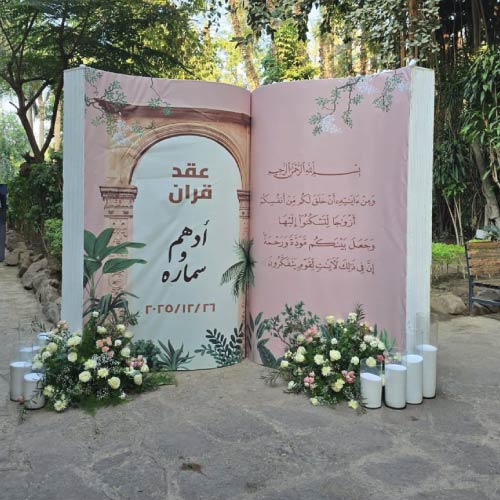
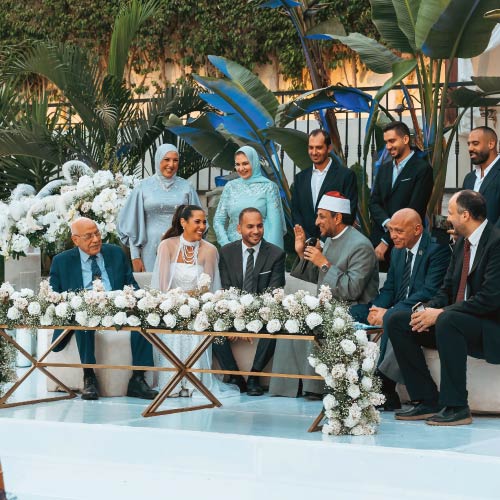
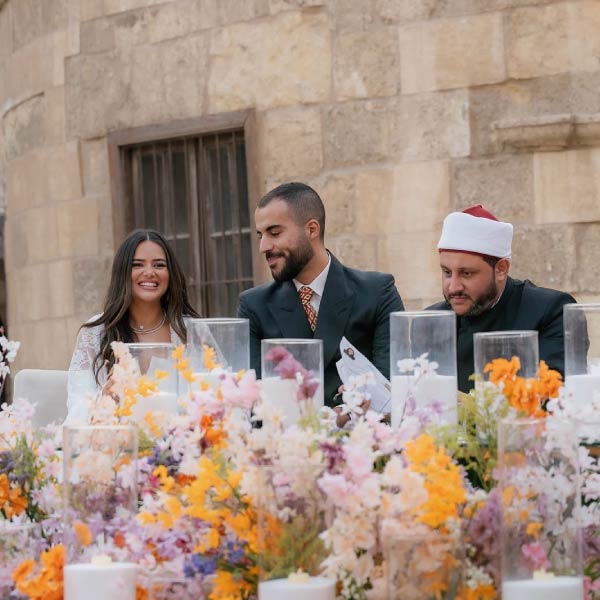
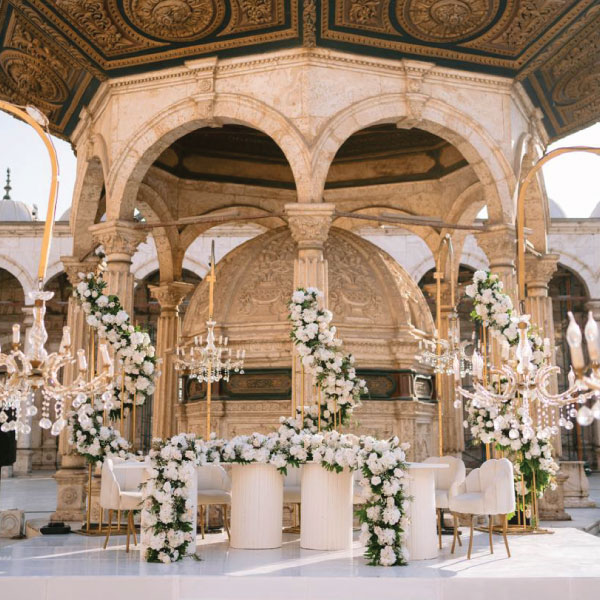
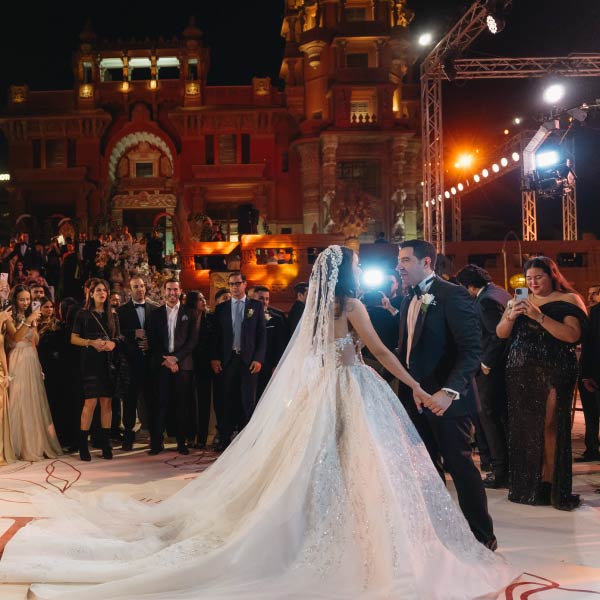
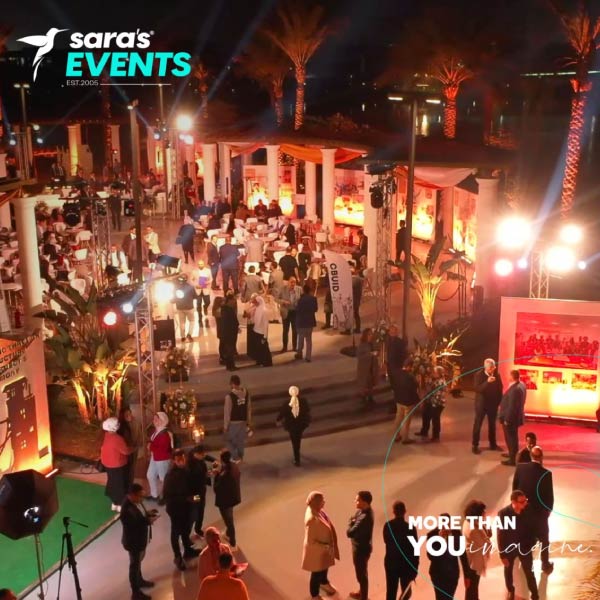
Alia Lokman and Ahmed Seada held their Katb Ketab at Dar Darb inside the Cairo Citadel on 3 May 2025. LOriental was appointed directly by the private client to plan, manage and cater the event, with the scope covering décor and setup coordination, catering, live bar service, a live food station, service planning and on-site event management.
That integrated scope mattered because the evening was not only a catering service. Ceremony timing, seating, guest flow, suppliers, décor and hospitality all had to move together, with one team accountable for keeping the experience coherent from arrival through the post-ceremony reception.
Service planned around the Katb Ketab rhythm
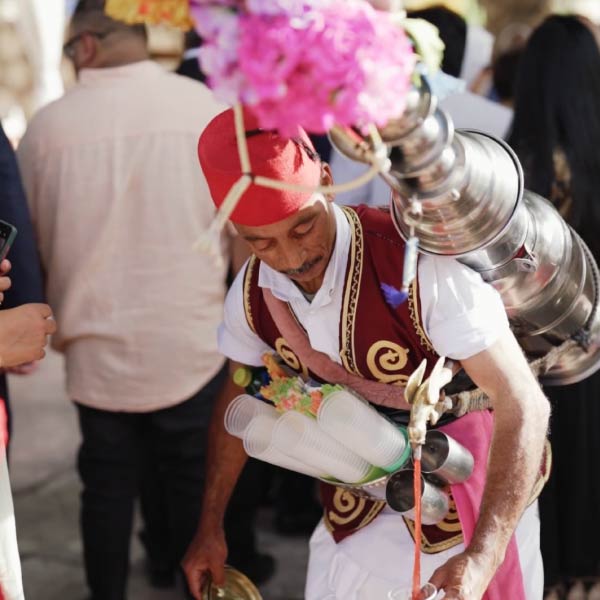
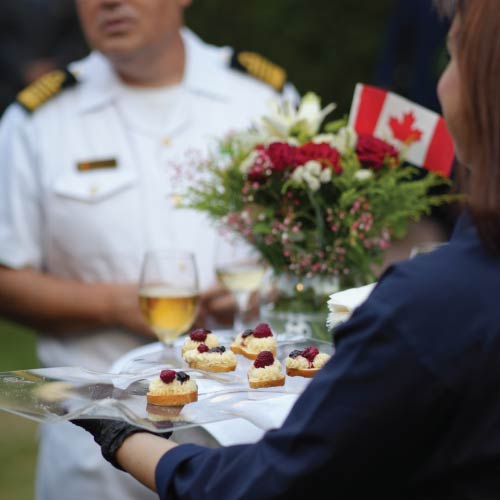
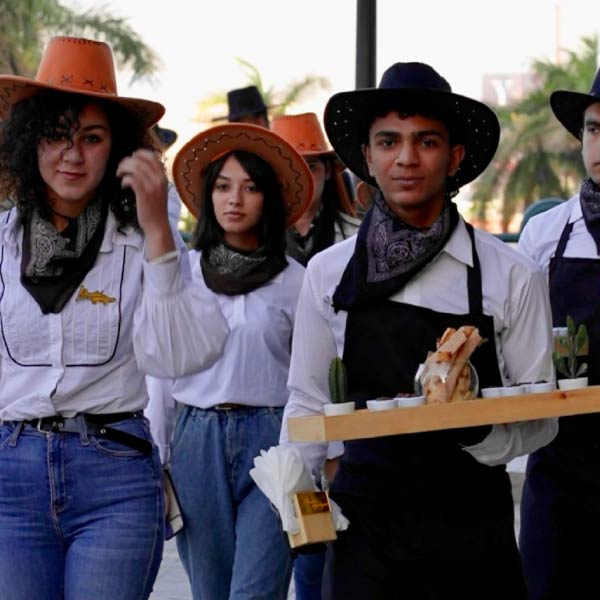
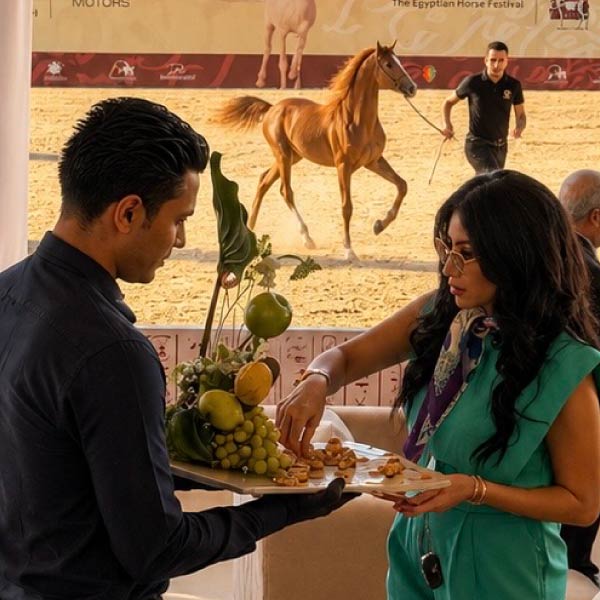
The service plan called for continuous pass-around hospitality, with lighter circulation before the Katb Ketab and greater service density once the ceremony moved into the reception phase. Fifteen waiters were assigned so the service rhythm could change without requiring a reset between the two moments.
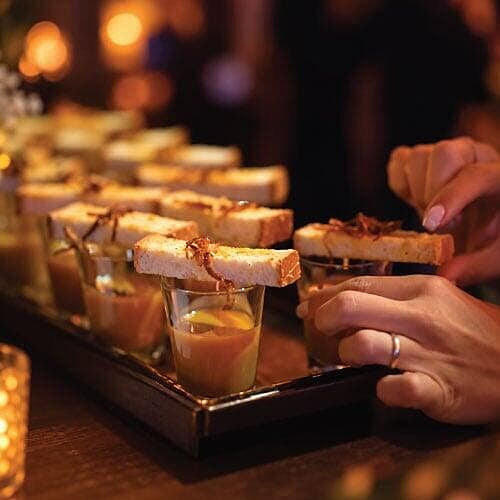
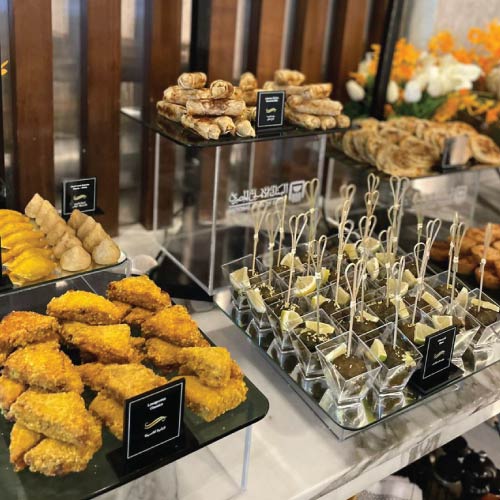
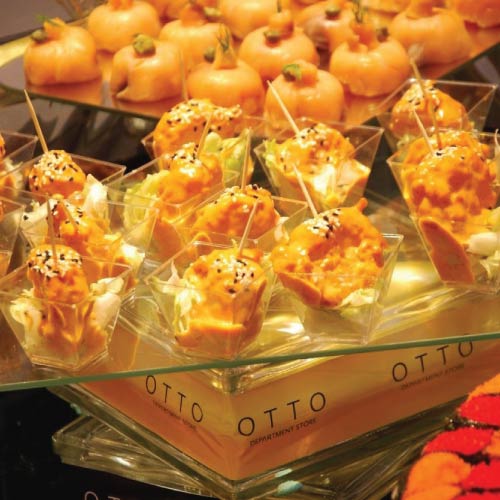
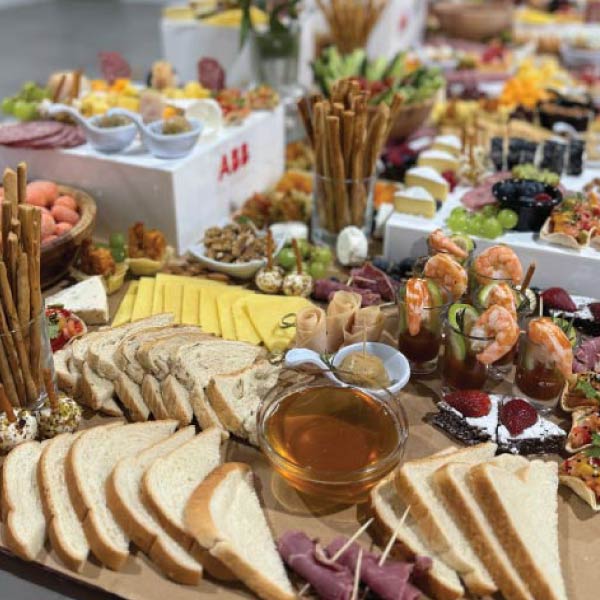
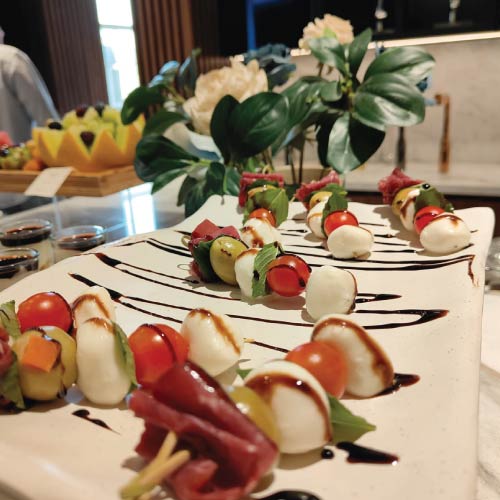
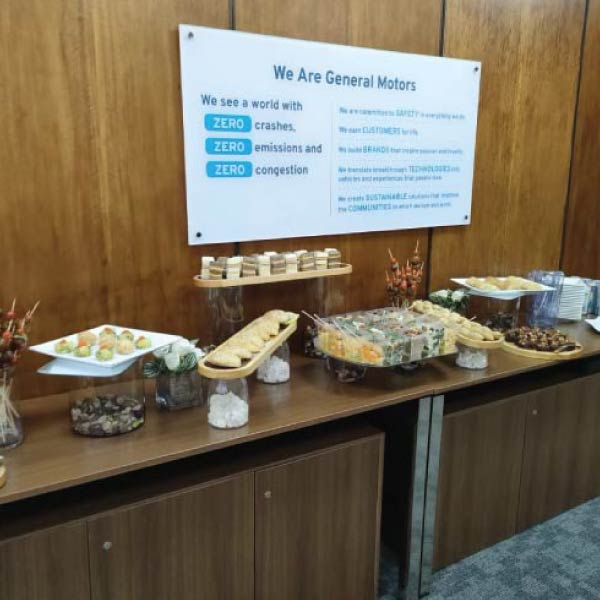
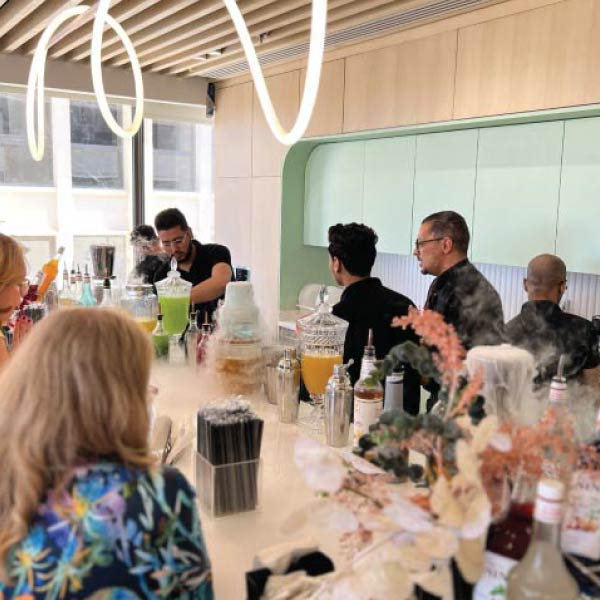
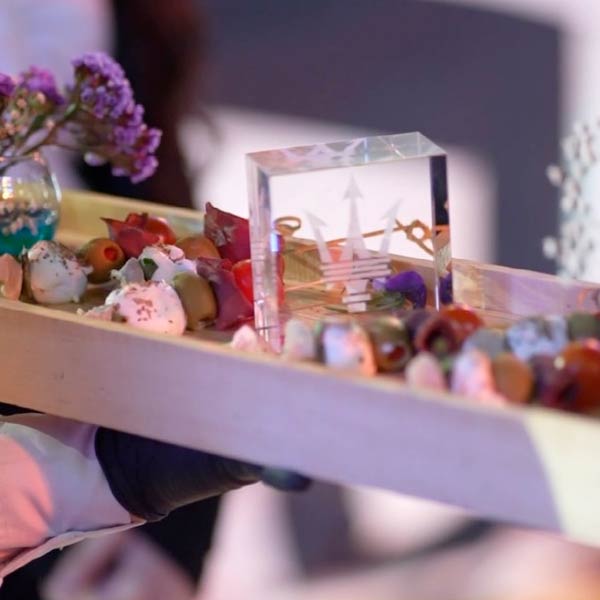
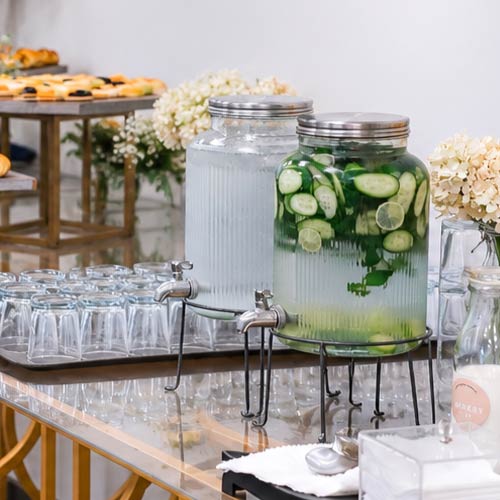
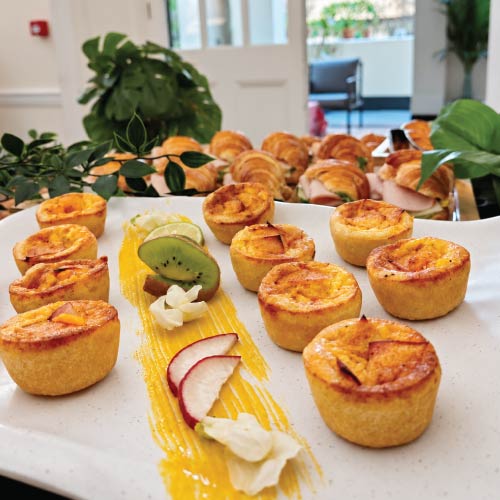
Production was planned around passed canapé, finger-food and dessert luxury bites, alongside a live vine-leaf sushi station and a three-hour cold-drinks bar for the 400 guests. The quantities are useful because they show the planned service load behind a format that still needed to feel fluid rather than mass-served.
A menu built for circulation
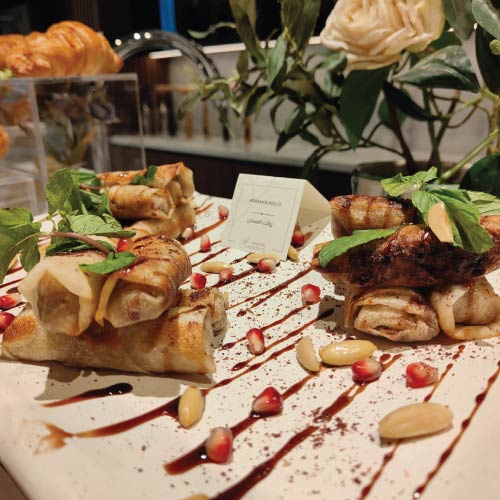
The passed menu moved between seafood, contemporary finger food and familiar Egyptian flavours: smoked-salmon crostini and mini domes, salmon-mango ceviche tostadas, bang bang shrimp, shrimp kunafa, Korean fried chicken bao, beef sliders, chicken shawarma, Alexandrian hawawshi sausage, mombar bonbons and pigeon meammar rice.
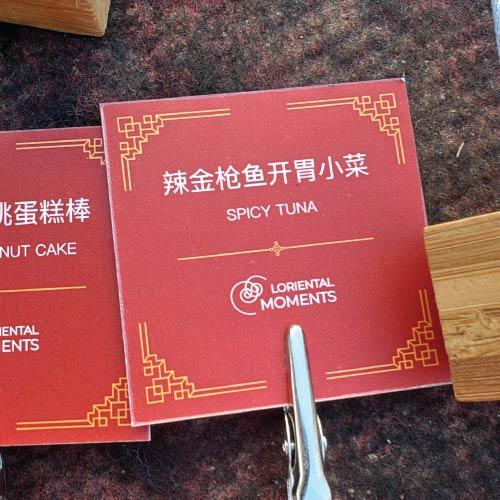
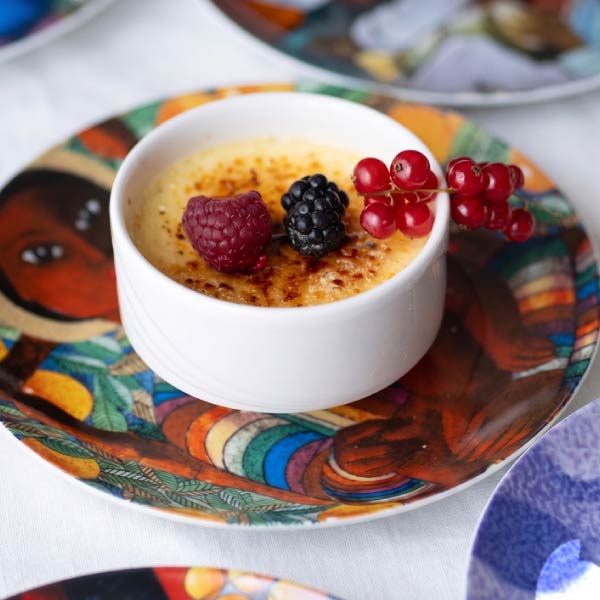
Desserts included lemon meringue bites, carrot-walnut cake pops and brownie bites. The live vine-leaf sushi station gave guests a fixed point of interaction while the rest of the food continued moving through the event.
The late change: protocol enters the setup
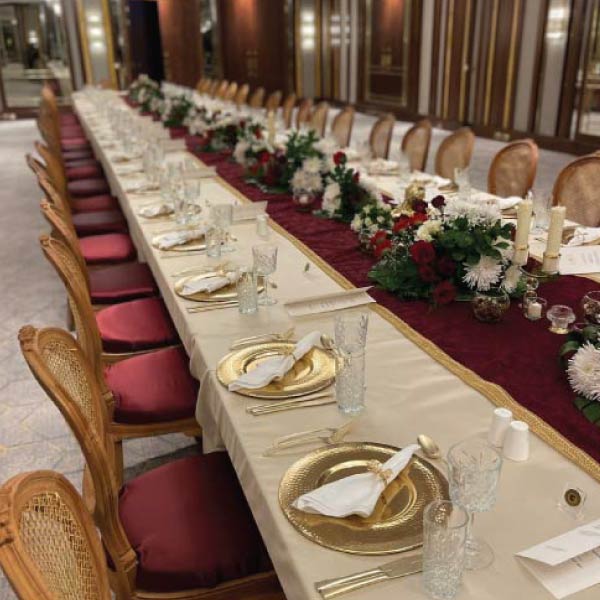
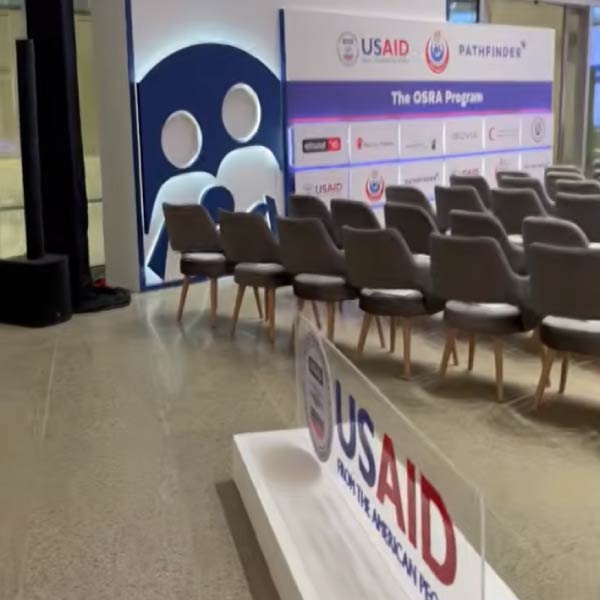
Approximately one to two hours before the event, a protocol team representing a senior government guest arrived with seating requirements that were not part of the bride’s approved setup. The VIP arrangement required specialist furniture and seating arrangements than the ones already installed, and a specific seating configuration.
The difficulty was timing as much as content. These were not minor stylistic preferences arriving during planning; they affected seating and décor at the point when final setup should normally have been closing.
Protecting protocol and the bride’s vision at the same time
LOriental’s role became one of coordination and integration: meet the protocol requirements without allowing the late intervention to visually fracture the event. Where the required protocol furniture was not available on site, the visiting team arranged immediate delivery and LOriental incorporated it into the existing setup.
Because the same team was managing décor, seating, service and event operations, the changes could be absorbed across the whole plan instead of becoming a series of disconnected supplier problems. The VIP arrangement was incorporated before arrival while the wider guest experience continued as planned.
Why full-service control mattered
This is where full event management became more valuable than any single menu or décor decision. A late change to one VIP seating area had consequences for visual balance, guest movement and final setup timing. The team could respond quickly because those functions were already being managed together.
At a landmark venue such as the Cairo Citadel, operating conditions can change quickly and different parts of the event can become interdependent within minutes. The event remained a private Katb Ketab, but the final hours demanded the same kind of calm coordination expected in a more formal protocol environment.
What this case demonstrates
Alia and Ahmed’s Katb Ketab is a strong example of LOriental’s landmark-venue and protocol intelligence: 400 guests, continuous pass-around service, a 15-waiter team, a live station, bar service and a late operational change handled inside one full-service planning structure.
The proof point is not that every Citadel event faces the same situation. It is that when an unexpected high-stakes requirement appeared close to guest arrival, the event could be adapted without handing the conflict back to the client or disrupting the wider hospitality plan.