The single entrance changes everything
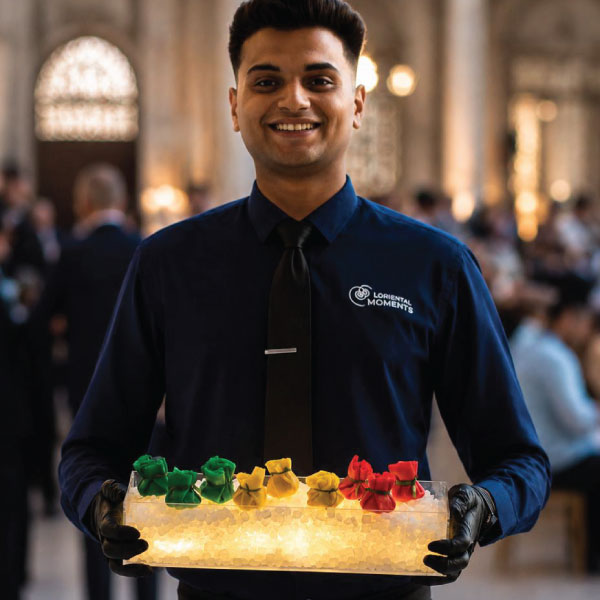
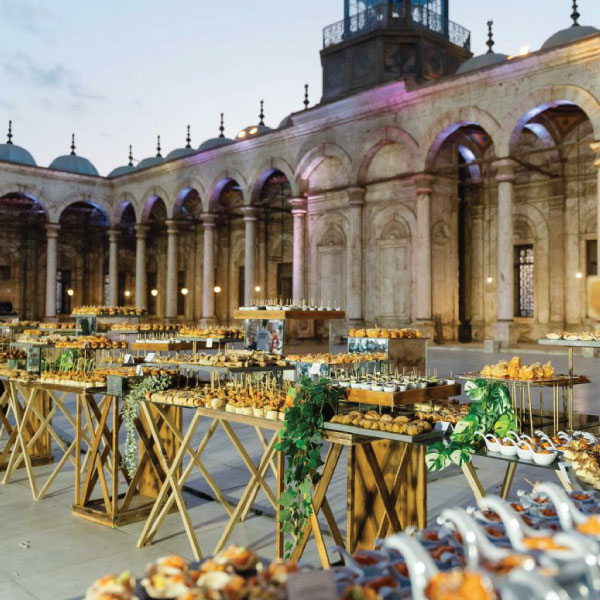
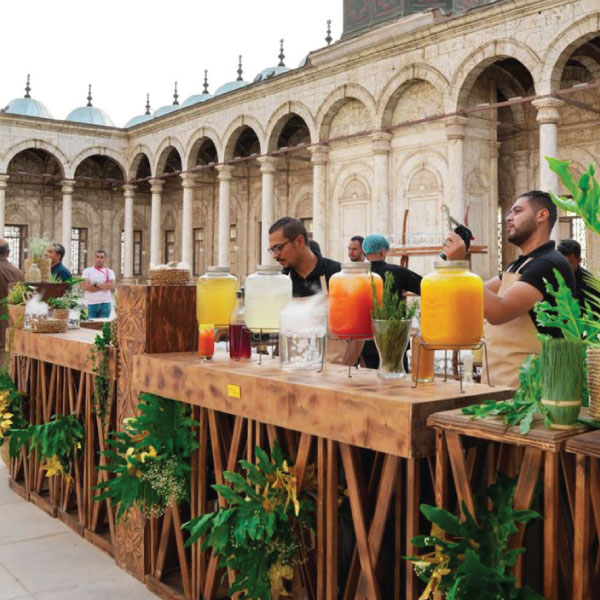
The venue is still a tourist attraction while you are setting up
The wind is not decorative
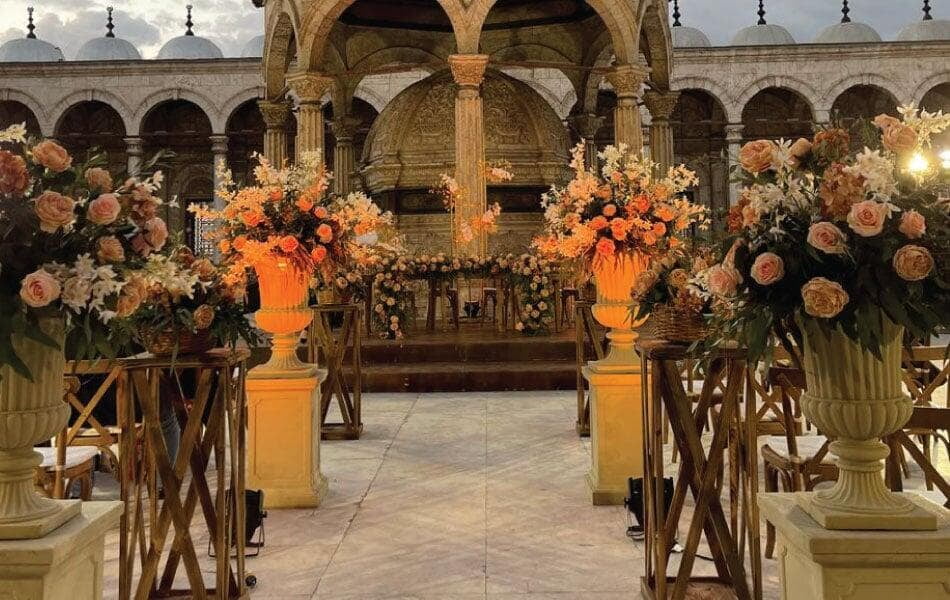
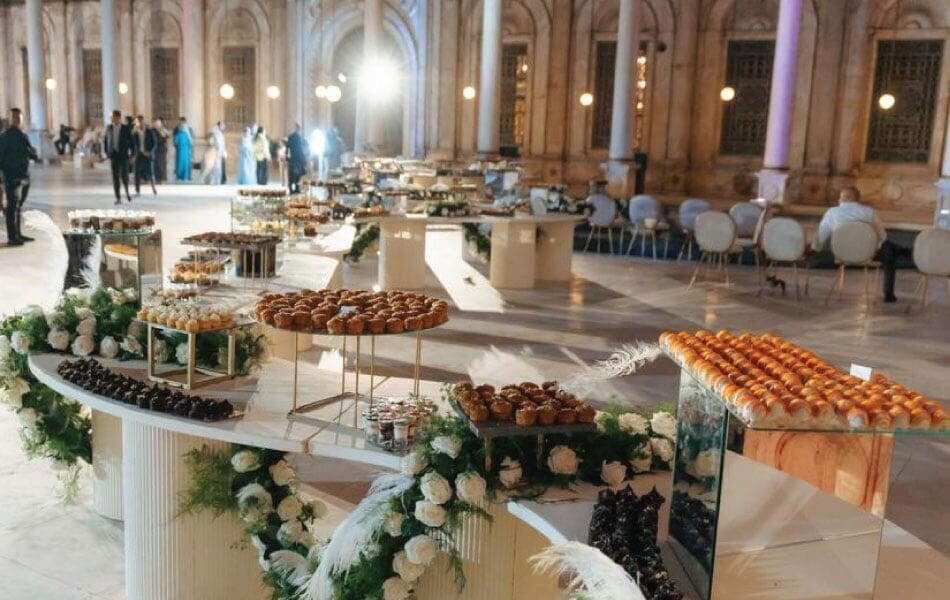
How LOriental adapts the catering
- We favour food that holds its quality over a long staging-to-service route.
- Passed service is often operationally stronger than a buffet when the client wants fast hospitality after the ceremony.
- We position beverage coverage around guest movement rather than assuming one remote bar is enough.
- We keep the back-of-house and replenishment plan tightly staffed because every tray journey is long.
- We avoid lightweight outdoor presentation elements unless they are properly secured or weighted.
- We plan worker access and backup staff before event day because entry depends on advance documentation.
- We calculate electrical load and keep catering on a dedicated generator when powered equipment is required.
Real LOriental Events Here
LOriental has delivered more than 150 events at Mohamed Ali Mosque, making it one of the Cairo Citadel venues we know most deeply. That repeated operating history sits inside a broader Citadel record of 300+ events and 50,000+ guests.
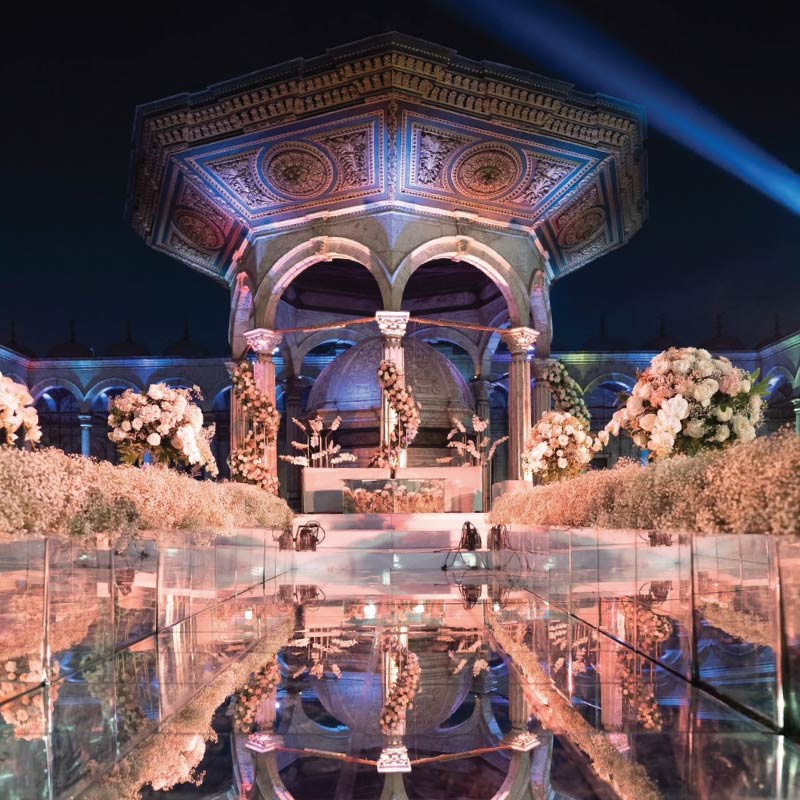
Hassan Ramzy & Lama: Maximalist Katb Ketab
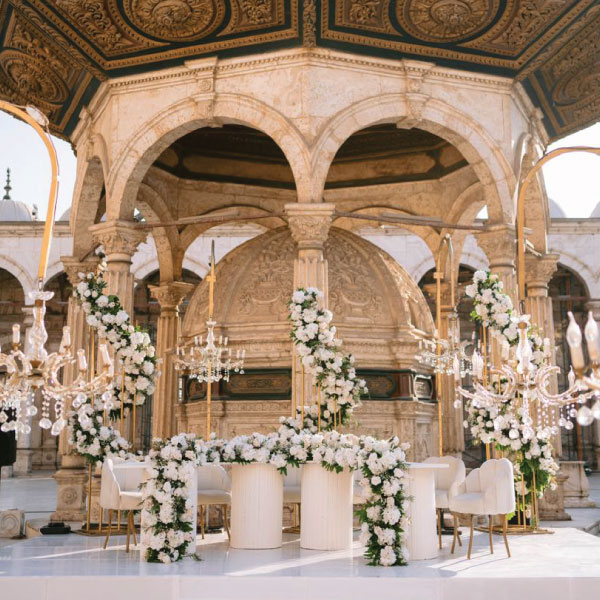
A full-service Katb Ketab at Mohamed Ali Mosque where LOriental managed the catering, creative direction, custom production and on-site execution around a deliberately maximalist floral and mirrored concept.
Cairo Citadel: Multi-Year Event Catering
Four years of repeated work across Mohamed Ali Mosque and other Citadel spaces turned venue familiarity into practical knowledge of access, service routes, setup pressure, guest flow and heritage-site operations.

FAQ
Venue conditions, capacities, access rules and permit requirements can change. Confirm the current position with the responsible authority for the event date before contracting.
Explore Other Historical Venues