A seated dinner, a delicate pastry and a guest-facing drink may look like very different parts of an event, but they share the same challenge: timing matters.
A plated main has to reach the table at the right temperature. A mille-feuille loses something if it sits assembled for too long. A drink should arrive looking considered without becoming more about the presentation than what is actually in the glass.
This part of LOriental’s Culinary program looks at those details: how we build food for synchronized seated service, how pastry technique shapes the desserts we serve, and how the non-alcoholic beverage program fits into the wider hospitality experience.
Building a Menu for Synchronized Service
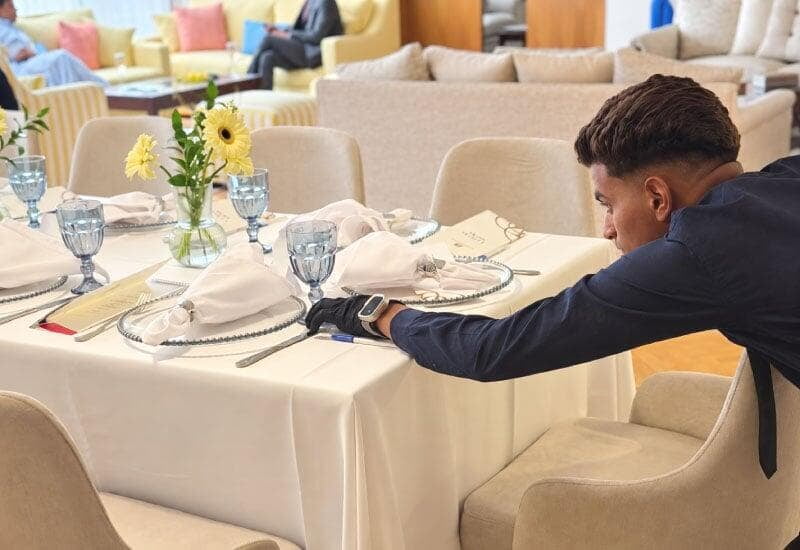
A seated menu has to work as a sequence, not simply as a collection of individually attractive dishes. The main course, sides and sauces need to be capable of reaching the room together. The guest profile and formality of the event matter. So does the venue itself.
Our seated repertoire can move from French and European references such as Beef Bourguignon, Coq au Vin, Veal Émincé à la Crème and Sea Bass with Lemon Beurre Blanc to dishes including Moroccan Beef Tagine, Chicken Piccata and premium seafood. The technique helps determine the format.
Risotto made that particularly clear during our own R&D. Trying to operate multiple mobile Parmesan-wheel trolleys simultaneously for a seated event pushed the batch size beyond the point where we were happy with the texture. We kept risotto, but changed the service rule.
That experience is one of several documented in our Culinary R&D Journal. For us, this is the point of testing food under event conditions rather than assuming that a recipe which works in the kitchen will automatically work in every service format.
Seated Dining in Practice
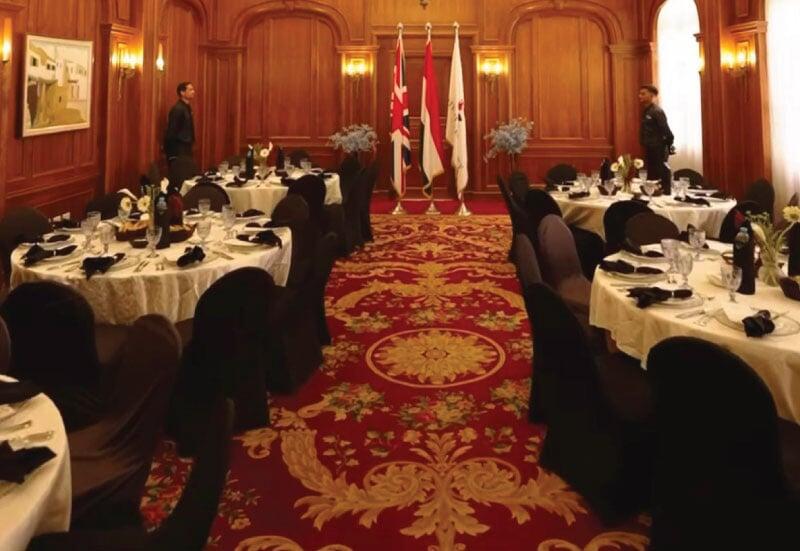
Our seated work has included diplomatic meals, institutional lunches and international-delegation events, with the menu changing to suit the guests and the occasion.
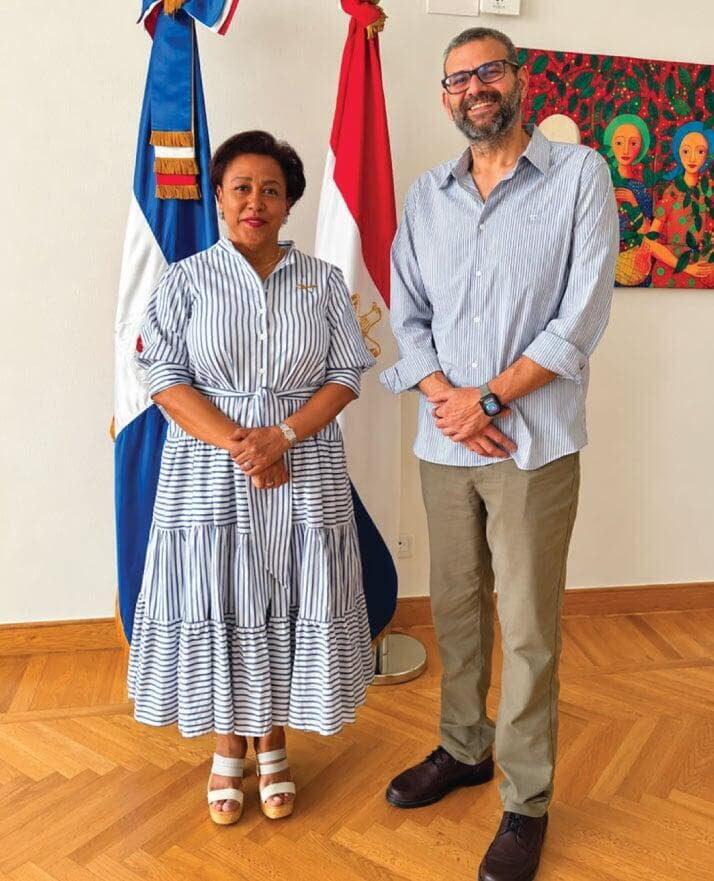
| Event | Format | Selected menu |
|---|---|---|
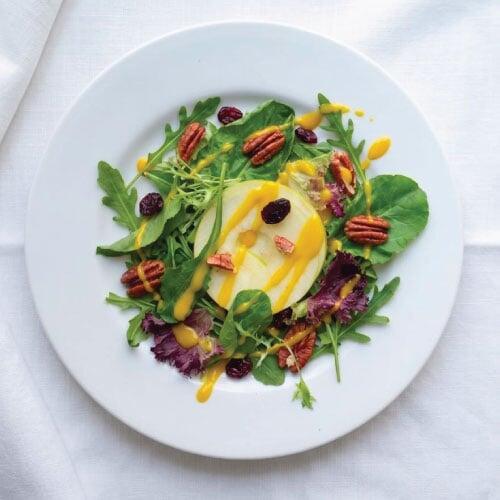
| British University in Egypt | 70-guest seated lunch attended by the British Ambassador, repeat client since 2024 | Apple Cranberry Pecan Salad and Fattoush; Mediterranean Mezze; Chicken Piccata or Beef Tenderloin; basmati rice and grilled vegetables; Tiramisu Dirt Cups, Chocolate Hazelnut Tartlets and Mango & Coconut Verrines |
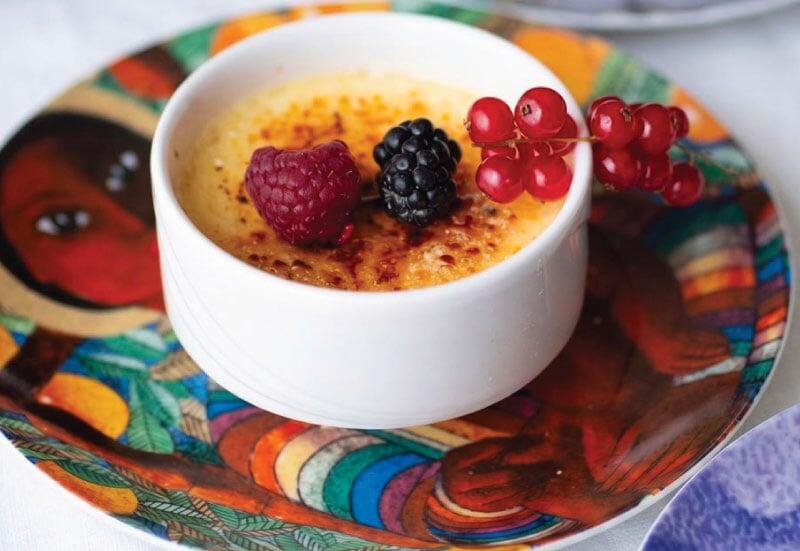
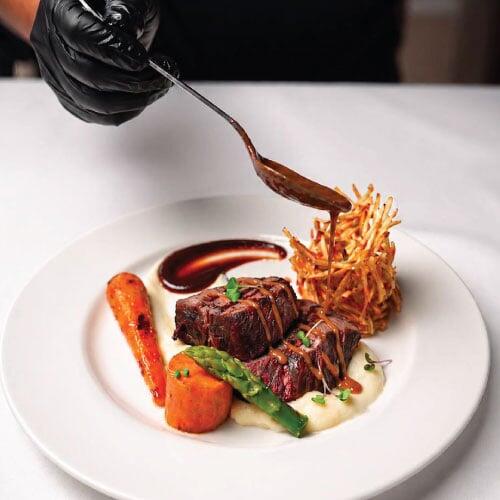
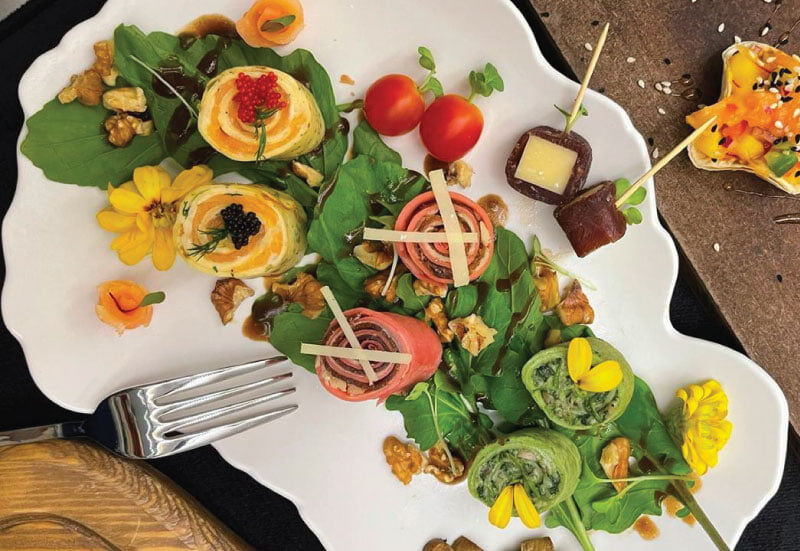
| Dominican Embassy | 15-guest seated diplomatic meal; repeat client | Smoked Salmon Roulade in crêpes with caviar; Apple Cranberry Pecan Salad; Beef Medallions with peanut-tamarind sauce, truffle mashed potatoes and glazed baby carrots; Vanilla Crème Brûlée |
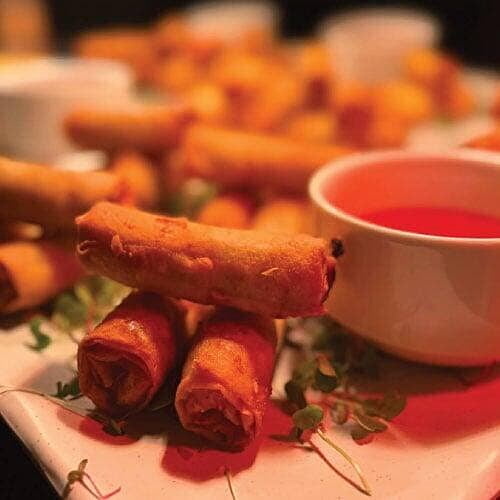
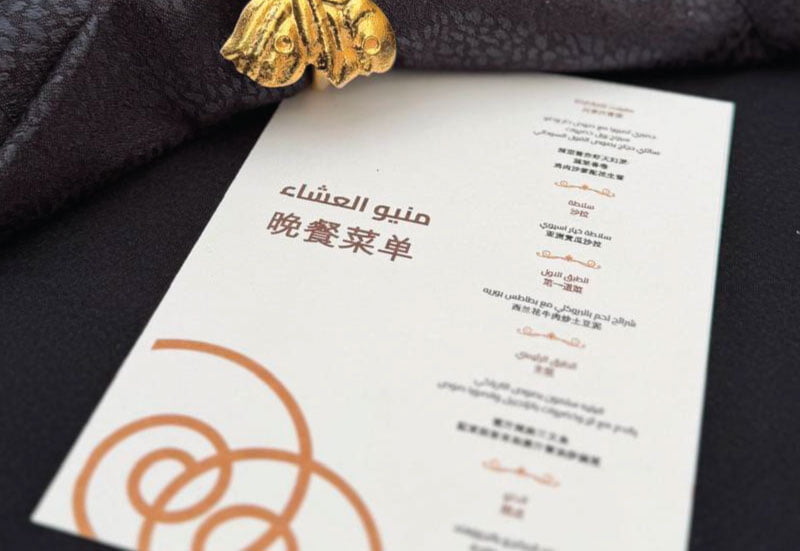
| NMEC — Chinese delegation | 100-guest seated meal | Shrimp Tempura, Vegetable Spring Rolls and Chicken Satay; Asian Cucumber Salad; Beef with Broccoli; Teriyaki Salmon with rice and ginger-soy vegetables; Mango & Coconut dessert and fresh fruit |
These menus are useful examples because they show how different seated events can become even when the underlying service challenge is the same: the room has to receive the food in a controlled, coordinated window.
Pâtisserie: Technique You Can See
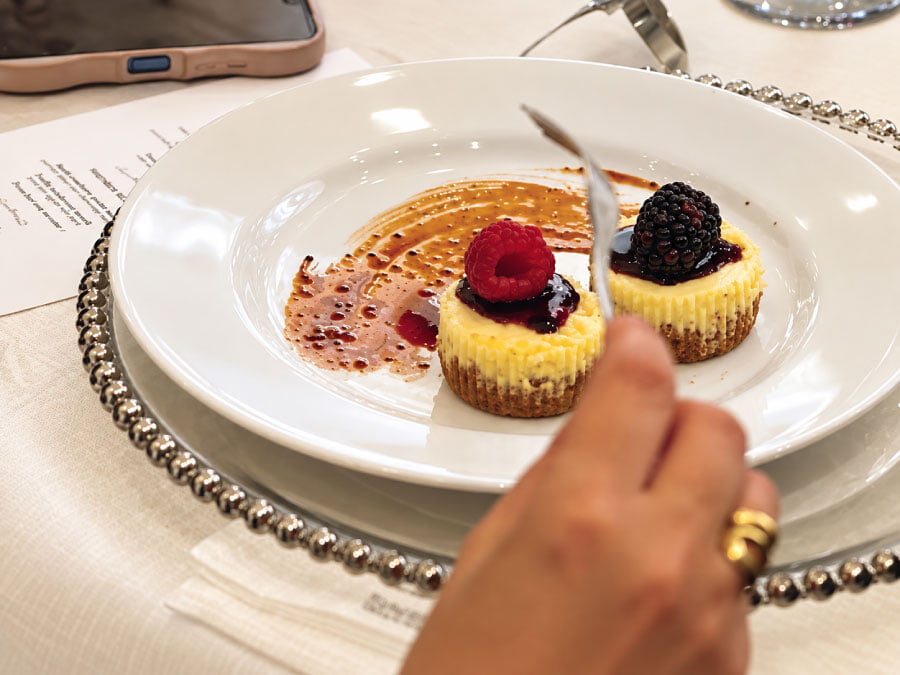
Pastry makes technique unusually visible. An éclair depends on choux. Mille-feuille depends on lamination. Pavlova depends on meringue. A contemporary dome may use mousse, a gel insert and glaze to create completely different textures within one small dessert. Those techniques are not interchangeable, and neither are the service requirements they create.
LOriental’s pâtisserie repertoire moves between French references, contemporary pastry and regional flavours. Mini Pistachio Éclairs use choux. Pistachio & Rose Mille-Feuille combines laminated pastry with a Middle Eastern flavour profile. Chocolate Raspberry Domes use mousse, gel and glaze, while Saffron & Rosewater Panna Cotta takes an Italian set dessert and moves it toward regional aromatics.
The wider repertoire also includes financiers, madeleines, profiteroles, pavlovas, verrines, tiramisu, Mont Blanc and regional sweets. The point is not to flatten all of those into “dessert.” Each one behaves differently because the technique behind it is different.
You can see those relationships more clearly in our Cuisines & Techniques and Signature Dishes Library.
Structure, Texture & Finish
Pastry often comes down to protecting structure.
A crisp shell, laminated layer or meringue does not have the same service life as mousse or set custard. Once cream, moisture and pastry meet, the clock starts running. That affects when a dessert should be filled, assembled or moved into service.
Mille-Feuille Royale is a good example. Final assembly happens close to the guest because that helps protect the crisp laminated pastry. Cannoli make the same point in a different form: filling them on demand avoids unnecessarily shortening the life of the shell.
With contemporary pastry such as Chocolate Raspberry Domes, the technique is different again. Mousse, gel inserts and glazing create the finished structure before service, so the problem is less about live assembly and more about maintaining the intended finish and texture. The dessert determines the service method.
When Dessert Is Finished Live
Some desserts benefit from keeping the final action in front of the guest. Mille-feuille can be assembled to order. Cannoli can be filled on demand. Churros can be fried and served warm. Crêpes and waffles can be cooked to order, while tiramisu can become part of a live assembly format.
Our Om Ali Oasis takes a familiar Egyptian dessert in another direction. The guest receives an individual portion, the chef caramelizes the surface with a blowtorch, and the final choice of toppings happens at the station. The live element does not replace the dessert. It changes the last part of the experience.
That same distinction sits at the center of how we approach live culinary stations: something meaningful should happen to the food in front of the guest.
The Non-Alcoholic Bar as Part of the Menu
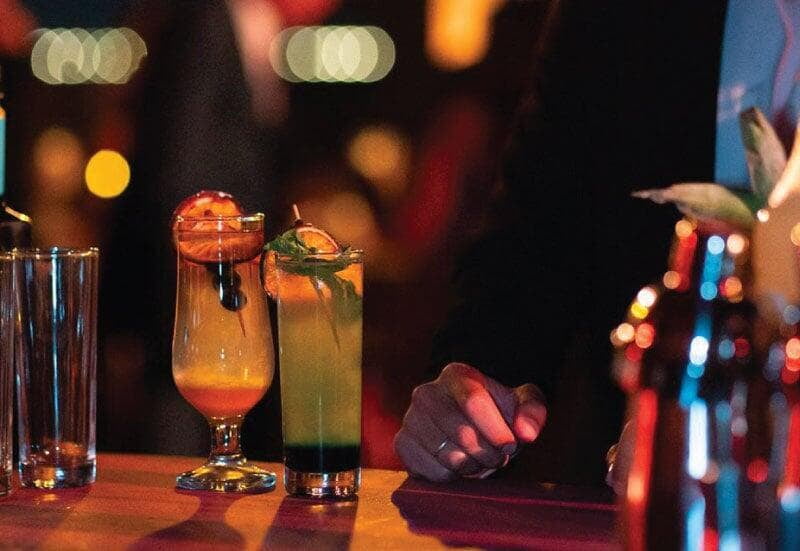
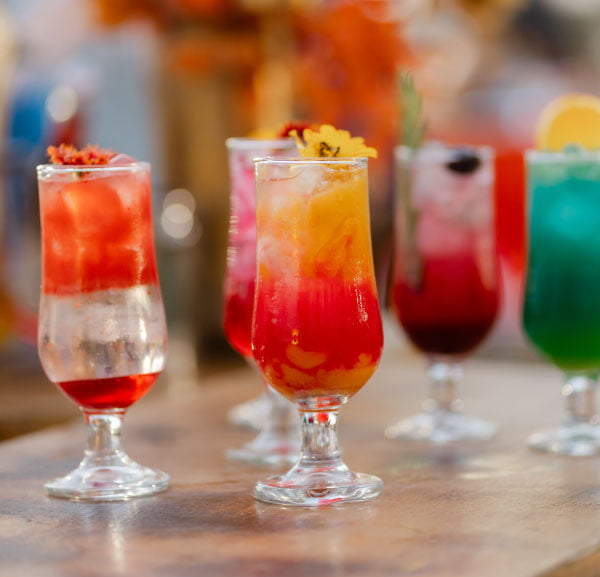
Beverages are planned as part of the hospitality rather than added at the end because an event obviously needs something to drink. LOriental’s beverage program is entirely non-alcoholic and can include cocktails, seasonal fresh juices, tea, Turkish coffee, live karak tea, boba, matcha, smoothies, milkshakes and more theatrical mocktail formats.
The mix changes with the event. A welcome drink has a different job from a beverage served throughout dinner. Turkish coffee creates a different moment from a cold juice or a guest-facing karak service. The beverage selection therefore sits alongside the food, timing and wider guest experience rather than operating as an independent list.
For the full commercial beverage offering, explore LOriental’s Live Bar & Beverages.
Building the Beverage Program
The starting point is the drink itself. What is being served, when should it reach the guest and what role does it play in the event? That answer may mean a welcome service as guests arrive, drinks moving through the room, a dedicated live bar or a beverage concept built around a particular style such as karak, matcha or boba.
The format can change, but the drink still has to make sense before anything theatrical is added around it.
Presentation Without Losing the Drink
Beverage service gives us plenty of room to play visually. Shimmer, lighting and other presentation effects can be used where they suit the drink and the event. The same is true of the equipment and serving format around it.
Our rule is simple: The drink comes first.
A visual effect should support what is in the glass rather than becoming the only reason the glass exists. That keeps the bar connected to the same Culinary approach used elsewhere at LOriental: technique, service and experience should work together rather than compete for attention.
The format can change, but the drink still has to make sense before anything theatrical is added around it.
Designing the Whole Dining Experience
Seated dining, pastry and beverages are separate disciplines, but guests do not experience them as separate website categories, they experience a meal.
The main course has to suit the service window. Dessert has to arrive with the texture it was designed to have. Drinks need to fit the pace and character of the event. The venue, guest count and service routes sit underneath all three.
That is why our Culinary R&D and Standards work connects recipe development to event execution, and why Food Designed for Events looks beyond the recipe itself at temperature, batching, finishing, guest flow and venue reality.
The menu works best when those decisions are made together.
Explore Dining, Desserts & Beverages
This page looks at the culinary thinking behind LOriental’s seated dining, pâtisserie and non-alcoholic beverage program. It explores how dishes are developed, refined and translated into event service, from plated courses and desserts to beverage pairings and presentation details. It also shows how technique, specification and consistency shape the guest experience beyond the menu itself. For the complete commercial options, menus and event formats, continue into the relevant catering sections.