• Culinary Overview

    Restaurant-Level Cuisine, Built for Events in Egypt.

    A research-led culinary program spanning global cuisines, professional techniques, live stations, plated dining, pâtisserie and non-alcoholic mixology, developed specifically for the realities of event service.

At a glance

A good event menu should feel as considered as the food in a contemporary restaurant or luxury hotel. Catering adds another layer: distance from the kitchen, service timing, guest flow, holding time and the pace of the room. LOriental Moments develops each dish with both the food and the event in mind.

Our current collection spans French braises, Italian risotto and filled pasta, sushi and sashimi, Thai and Indonesian dishes, Indian tandoori cooking, Spanish paella, Egyptian and Levantine food, low-and-slow American barbecue, Brazilian rodizio, pâtisserie, live dessert work and a non-alcoholic bar program.
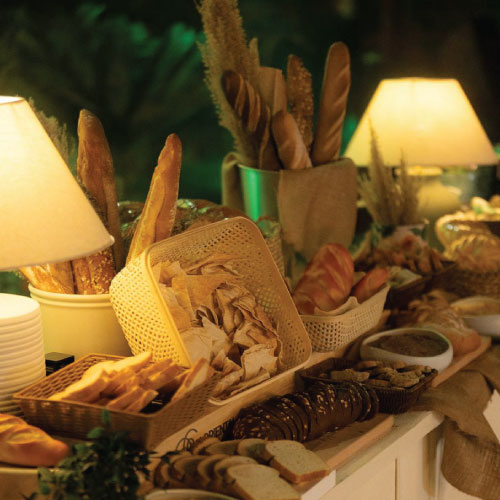
Bread and butter station at Australia National Day at the Official Residence in Cairo
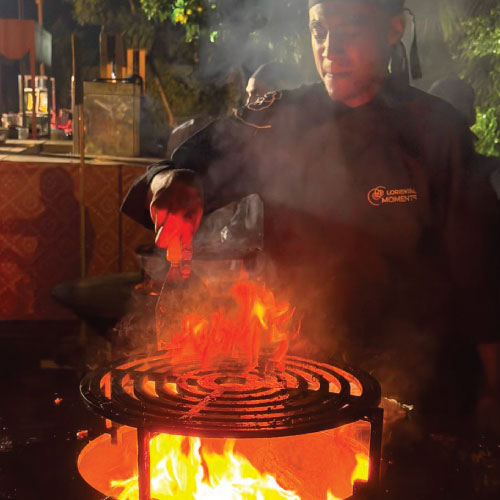
LOriental chef on live station at an event
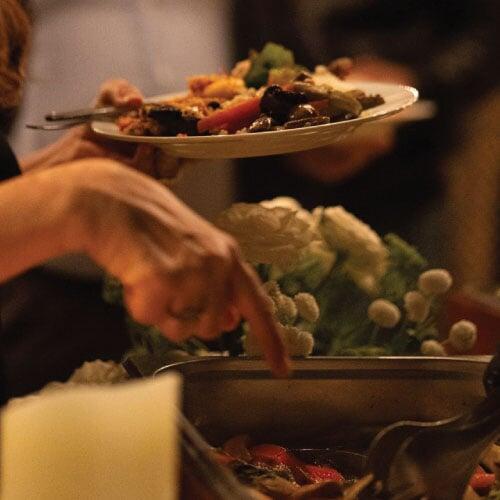
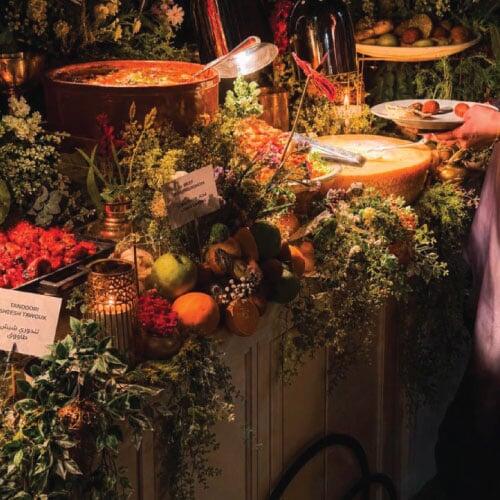
Guest pointing at food at an open buffet

How the food is developed

Cofounder & CEO Sherif Hussein chairs LOriental's four-person Culinary R&D Panel, which also includes Founder & Culinary Advisor Nermine Zahwi, Head of Production & Culinary Director Ibrahim Bebars, and Senior Production Chef Abbas Zaky Ahmed. Any member can bring an idea to the table. From there, the dish moves through research, adaptation, repeated testing and focus-group tasting before the panel reviews and approves the final version.

An approved dish is written down in detail: ingredients, quantities, critical method steps, yield, portioning, presentation and service requirements. It then becomes part of the LOriental Master Recipe Database. The panel owns and maintains that body of work; daily event production sits with a separate team.

Product Management takes the approved recipes and builds them into menu items, collections and commercial offers. Customer Experience is trained on the food, the service formats and the logic behind each product, so the team can help clients shape a menu around the occasion, venue, guests and budget. Once the menu is agreed, Production takes over under the Head of Production & Culinary Director, with the Senior Production Chef leading hands-on kitchen execution.

Where the references come from

Nermine and Sherif bring a wide international frame of reference to the panel. They have lived and worked in Egypt, the UAE and Canada, and have travelled extensively across Europe, North America, the Middle East and beyond. Food is part of how they travel: they seek out the restaurants, chefs and dining experiences a destination is known for and experience them first-hand.

The research continues after the trip through cookbooks, published methods, documented techniques and restaurant culture. Those references can enter LOriental R&D in different ways. Some are followed closely. Others are adjusted for Egyptian tastes, ingredient availability or event service, combined with a regional idea, or dropped when they do not translate well to catering.

Over time, that has given LOriental a menu shaped by constant exposure to food from different places, cuisines and culinary traditions, while still being developed for the realities of events in Egypt. Some of that research has a clearly documented source we're happy to name — a classic cookbook method, a well-established professional technique. Elsewhere, a dish sits within a broader tradition or region rather than one single origin, and the copy reflects that honestly.

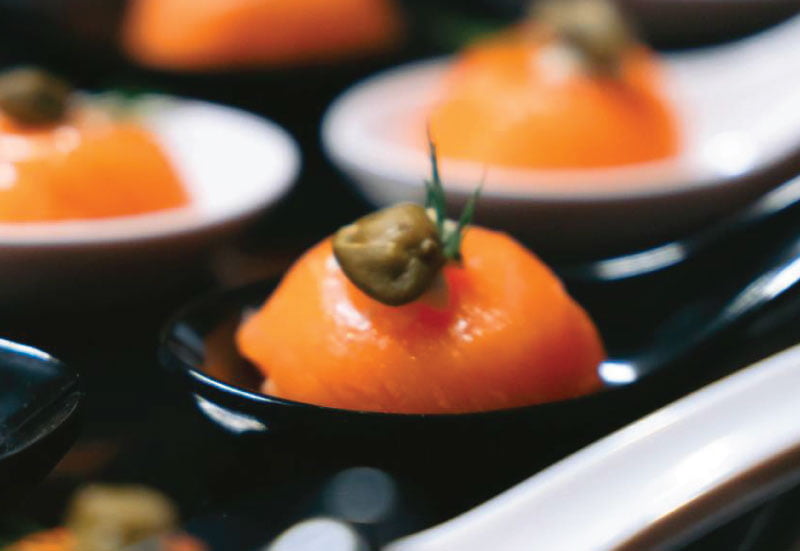
Smoked salmon mini domes

Technique shapes the way each dish is built

Technique changes the outcome of the dish. Beef Bourguignon depends on browning, slow braising and a properly finished sauce. Butter-Poached Lobster uses beurre monté to cook the lobster gently. Sea Bass with Lemon Beurre Blanc needs a clean sear and a stable butter emulsion. Salmon Gravlax is cured ahead of service and sliced close to the guest. Risotto Rêverie stays in small batches because the texture falls away when too much is cooked at once.

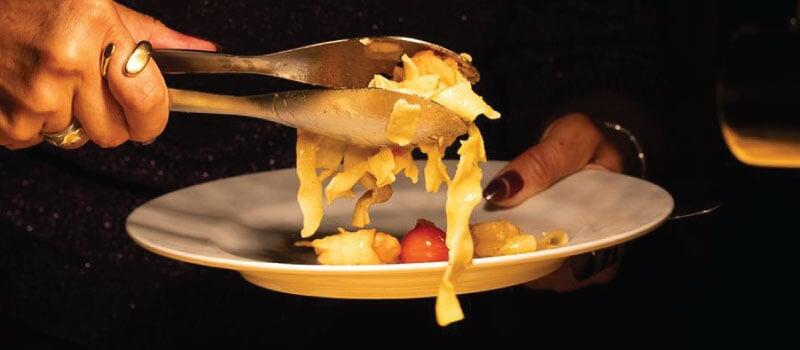
The same principle runs through the rest of the menu. Texas Smokehouse BBQ starts hours before guests arrive with low-and-slow smoking. Pasta Viva and Risotto Rêverie bring the final cooking closer to service. In pâtisserie, choux, laminated pastry, mousse, meringue and glazing determine the structure and texture of the dessert.

Those details are written into the recipe specification. Technique decides what can be prepared in advance, what must happen at the last minute, how long a dish can hold, and whether it belongs on a buffet, at a live station or in plated service.

Built to Work in a Live Event

A tasting tells us whether a dish works in the kitchen. An event tests everything around it: transport, holding time, batching, service routes and guest flow. Risotto wants controlled batches. Gravlax benefits from slicing close to service. A roast can be carved in front of guests. A fried item may need to move from the buffet to a live station. The format is decided before the menu reaches Production.

Explore Food Designed for Events →

Culinary breadth backed by event operations

LOriental Moments has delivered more than 2,000 events. The operating company is registered by Egypt's National Food Safety Authority, licensed by the Industrial Development Authority and ISO 22000:2018 certified in food safety management. That operating base is what allows a detailed recipe to arrive at a live event with its standard intact.
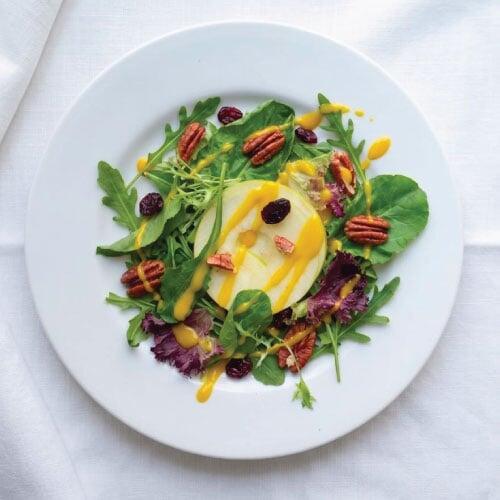
Apple cranberry pecan salad
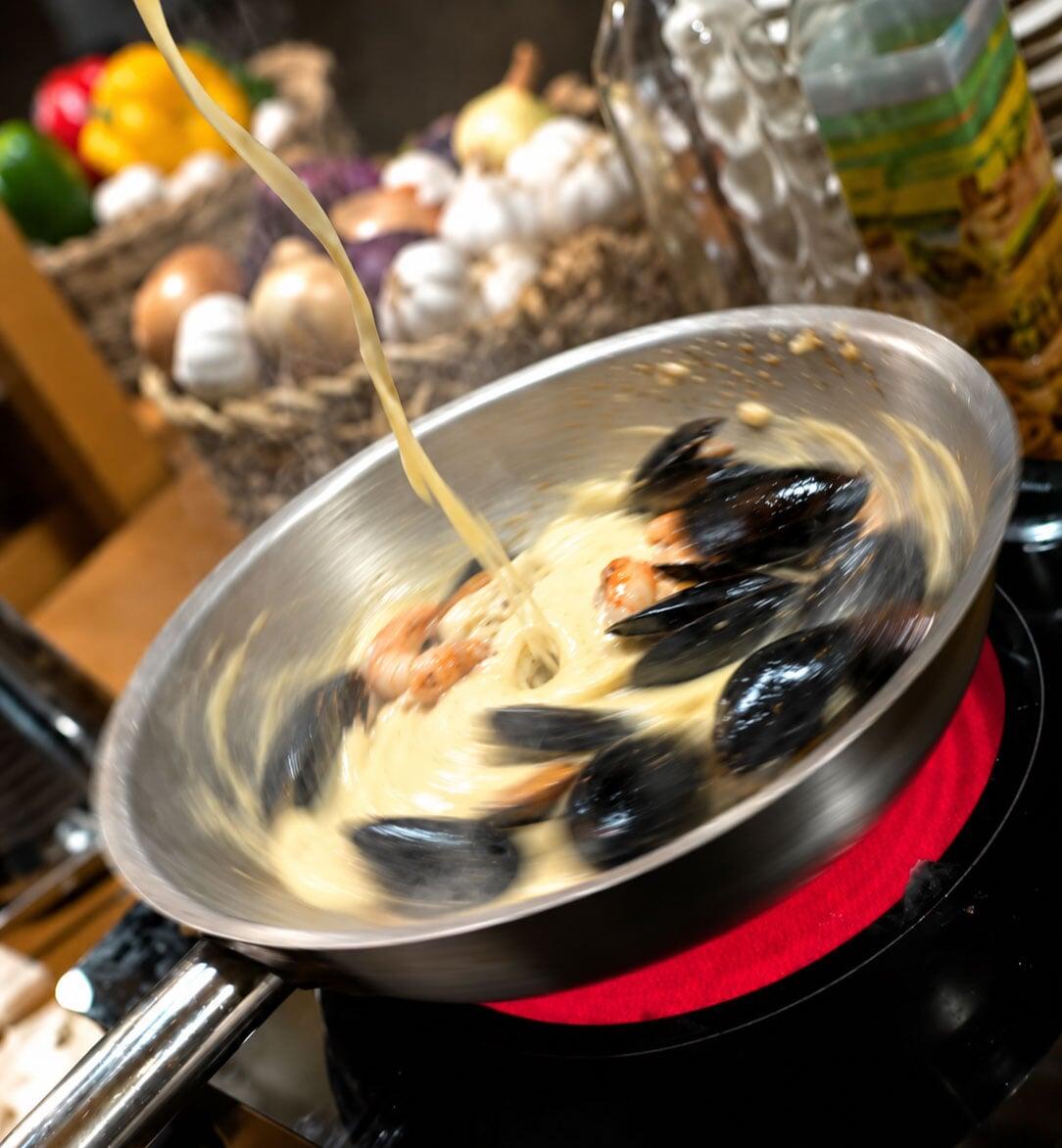
Seafood pasta live station

Explore the culinary program

  • Culinary R&D & Standards — how dishes are researched, adapted, tested and approved; what is documented before a dish enters the Master Recipe Database; and how Product Management, Customer Experience and Production turn R&D into a live catering experience.
  • Culinary Research & Recipe Origins — the cookbooks, techniques and traditions behind specific LOriental dishes.
  • Cuisines & Techniques — the repertoire explained through actual food and culinary method.
  • Signature Dishes — a curated library of dishes that best show how the current collection is cooked and served.
  • Food Designed for Events — what changes when restaurant-style food has to work at event scale.
  • Live Culinary Stations — real cooking, carving and finishing in front of guests.
  • Dining, Pâtisserie & Bar — plated dining, pâtisserie and non-alcoholic mixology.

FAQ

Is LOriental a chef-led caterer?

LOriental develops its menus through a four-person Culinary R&D Panel chaired by Cofounder & CEO Sherif Hussein. The panel sets and updates the recipes in the Master Recipe Database, while daily event execution belongs to the Production Department under the Head of Production & Culinary Director, with the Senior Production Chef leading hands-on kitchen execution. Sherif remains involved in research, development and recipe review, while Nermine contributes founder perspective, international culinary references and tasting feedback in an advisory capacity. Customer feedback and event learnings are monitored after service.

Does LOriental use techniques or methods documented by well-known chefs and cookbooks?

Yes, where the relationship is specific and documented, we say so — for example, a classic French cookbook method or a professional technique like butter poaching. Elsewhere, a dish draws on a broader culinary tradition or region rather than one specific source, and we describe it that way rather than overstating the connection.

Who helps clients build their event menu?

The Customer Experience team is trained on the culinary collection, service formats and product logic so it can act as a catering consultant. The team works with the client to build a menu around the event format, guest profile, venue, service rhythm and budget.

Can LOriental serve seated dinners?

Yes. The current collection includes mains, sides and desserts suitable for plated service, while live or tableside techniques can be integrated when they protect quality or improve the service rhythm.

What cuisines does LOriental offer?

The current collection spans Egyptian and Levantine food alongside French, Italian, Japanese, Korean, Thai, Indonesian, Indian, Spanish, Moroccan, Brazilian, Mexican and regional American influences.

Items have been added to cart.
One or more items could not be added to cart due to certain restrictions.
Close
Added to cart
- There was an error adding to cart. Please try again.
Quantity updated
- An error occurred. Please try again later.
Deleted from cart
- Can't delete this product from the cart at the moment. Please try again later.