KATB KETAB & HISTORIC VENUE CATERING | CAIRO
Cairo Citadel Katb Ketab & Event Catering: What 300+ Events Have Taught Us
Since LOriental's first recorded Citadel Katb Ketab in January 2022, the team has catered more than 300 events across the historic complex — including 200+ Katb Ketab celebrations and 50,000+ guests.
- FIRST RECORDED EVENT: 20 JAN 2022
- CITADEL EVENTS: 300+
- KATB KETAB: 200+
- GUESTS SERVED: 50,000+
One ceremony became a multi-year operating history
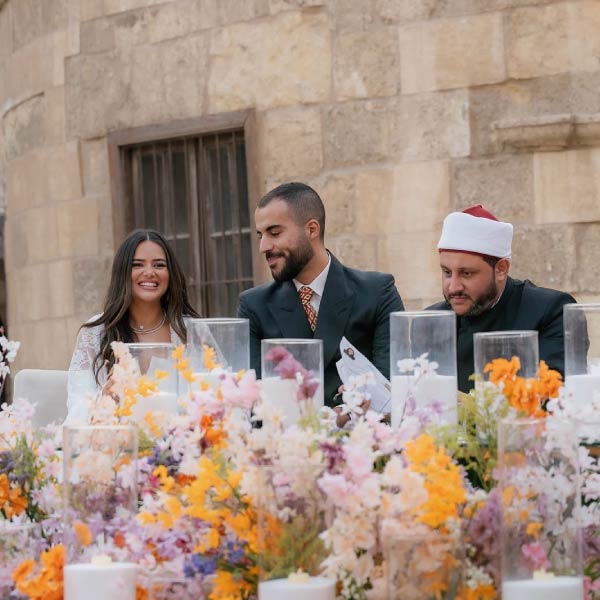
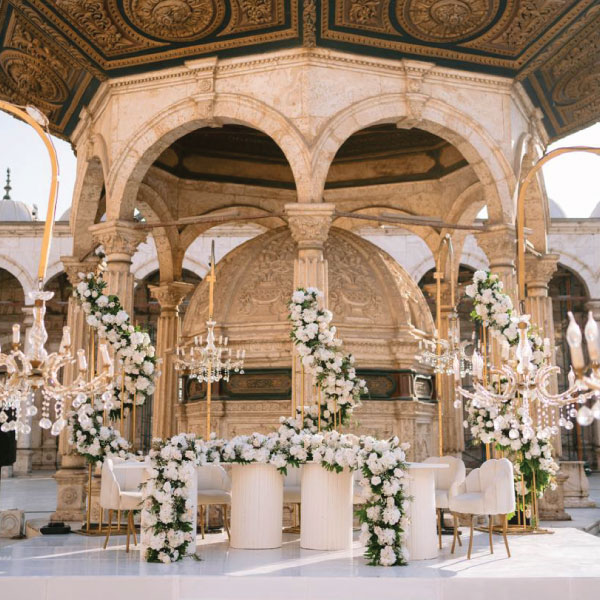
The relationship with the Cairo Citadel began with a 200-guest Katb Ketab at Mohamed Ali Mosque on 20 January 2022. The booking came through a returning LOriental customer. What followed was not a sequence of identical events, but a growing body of first-hand operating knowledge across different courtyards, gardens and ceremonial spaces.
Today, LOriental's public operating record at the Citadel exceeds 300 events, 200 Katb Ketab celebrations and 50,000 guests served. More than 150 of those events have taken place at Mohamed Ali Mosque alone. The scale matters because familiarity with a historic venue only becomes useful when it changes how the next event is planned.
The venue changes the catering plan before the menu does
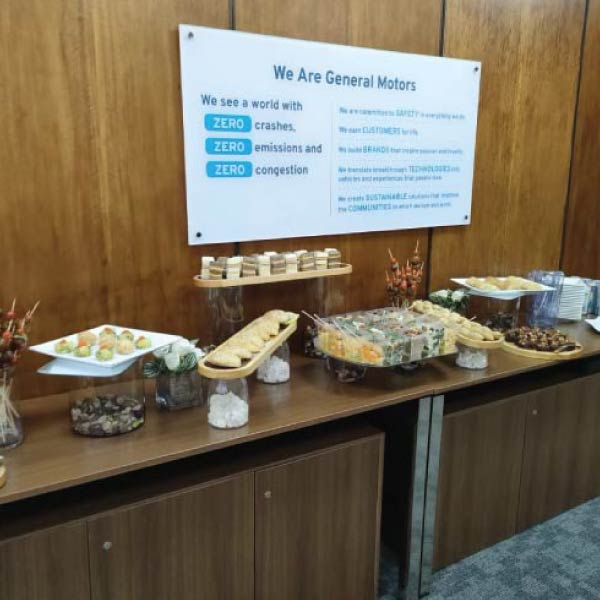
At the Citadel, the service plan starts with the site itself. Staff access must be cleared in advance. Open flame restrictions shift hot production and holding onto powered equipment. Catering power has to be planned separately from lighting and event production wherever possible, and setup must work around an active tourist site with compressed access windows.
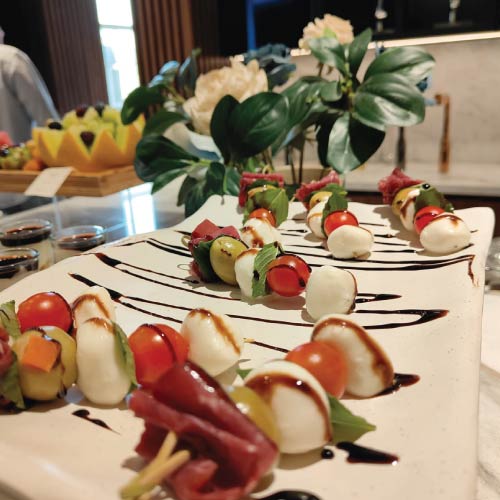
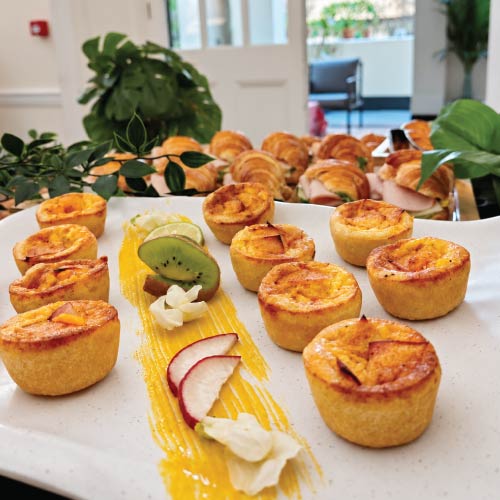
The replenishment route also changes what food can perform well. A canapé that looks perfect at the staging point still has to arrive at the guest in the same condition after the real walk from back-of-house to service. Wind, distance, steps, power and guest movement are not background details here; they shape the hospitality format.
Mohamed Ali Mosque: when the tray journey matters
Mohamed Ali Mosque is LOriental's deepest Citadel venue, with 150+ events in the current operating record. It is also one of the clearest examples of why venue intelligence matters.
Guest and service circulation share a constrained approach, while the catering back area sits outside the courtyard. Replenishment can take several minutes before a tray reaches the guest-facing service zone. The courtyard can also produce strong wind tunnels, so lightweight signage, menu cards and presentation elements have to be treated differently from the same pieces in a sheltered ballroom.
For venue background, the Egyptian Ministry of Tourism and Antiquities maintains official references for the Cairo Citadel and Muhammad Ali Mosque.
Eight Citadel spaces, eight different operating realities
LOriental's Citadel experience now spans Mohamed Ali Mosque, Dar Darb, Bir Youssef, Sareyet el Gabal, Police Museum Courtyard, Military Museum Courtyard, Royal Garden and Burj El-Haddad. They belong to the same historic complex, but they are definitely not interchangeable venues.
Dar Darb has indoor back-of-house rooms that shorten staging and replenishment routes.
Bir Youssef benefits from separate guest, bridal and service access, while its long, narrow footprint and level changes shape the layout.
Sareyet el Gabal can place the ceremony inside the active mosque while food and beverage remain in approved exterior hospitality areas.
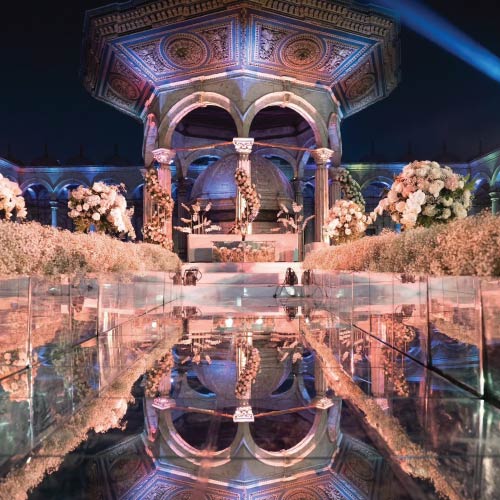
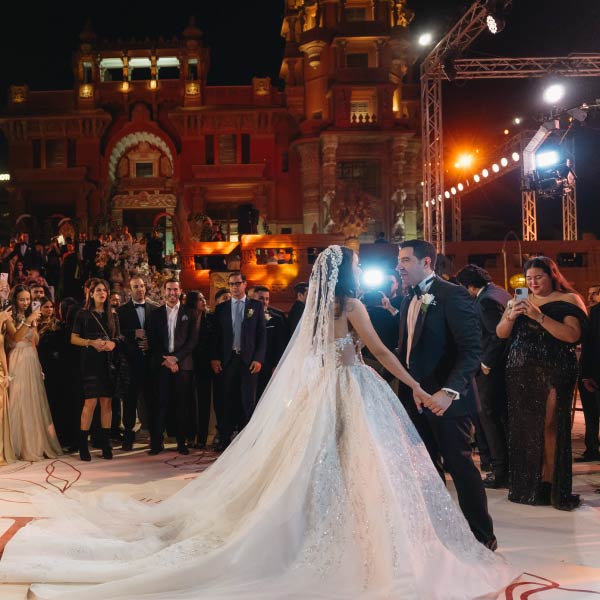
Police Museum Courtyard is a large open canvas where service points, lighting, furniture and guest zones have to create the event architecture.
Royal Garden allows a softer garden format and different buffet possibilities from the stone courtyards.
Military Museum Courtyard and Burj El-Haddad each require their own access, layout and operating checks rather than assumptions carried over from another Citadel space.
Katb Ketab is a compressed hospitality format
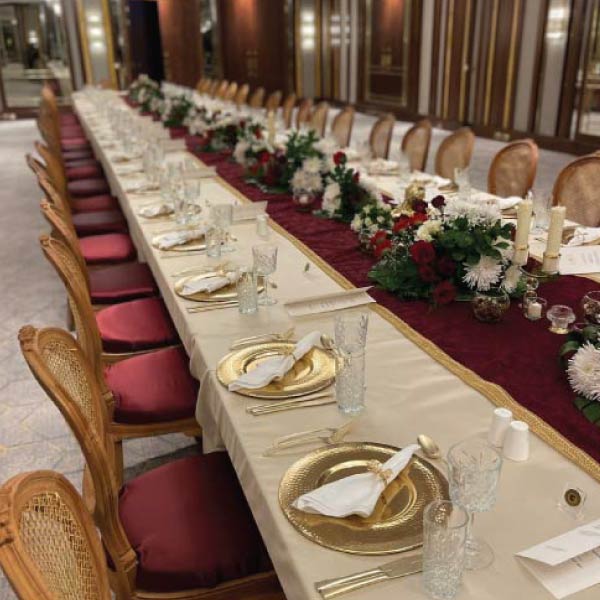
A Citadel Katb Ketab has to move quickly. Under the venue rules currently in place, the standard booking is three hours, so the ceremony, photography, guest movement and reception are compressed into the same short window. LOriental plans service backward from the ceremony finish so beverage positions, trays and service teams are ready before the guest flow changes.
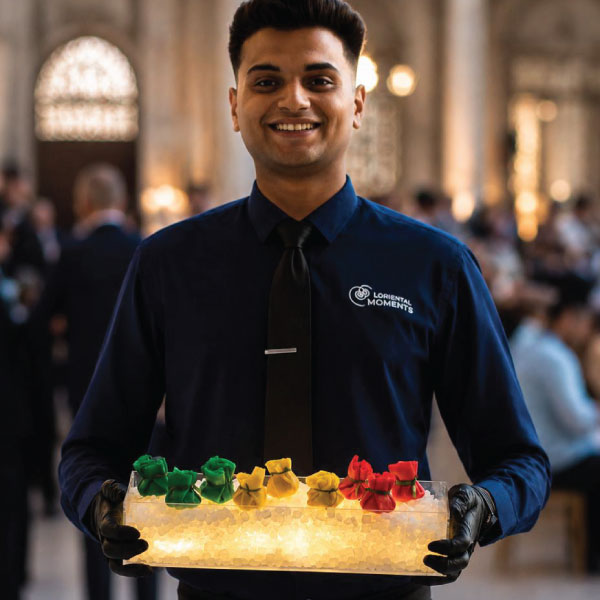
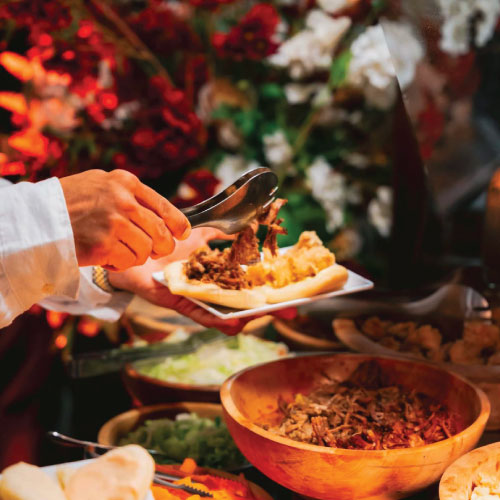
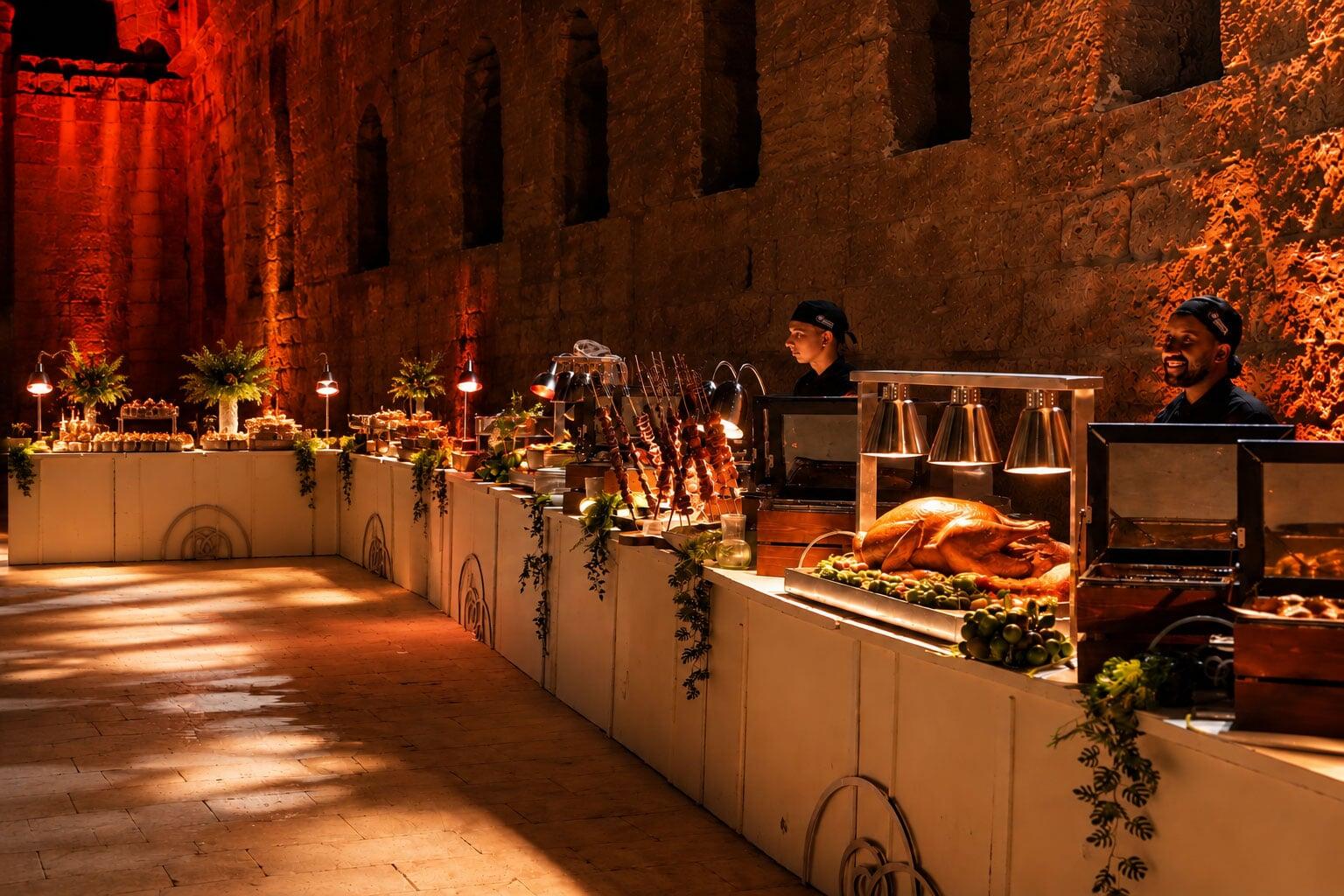
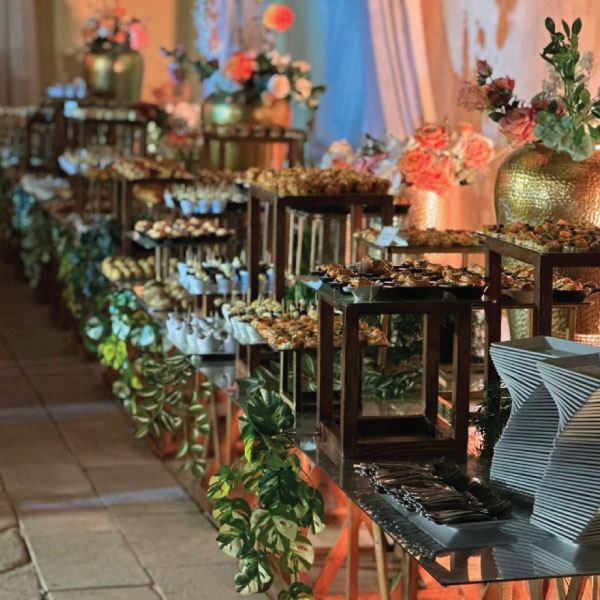
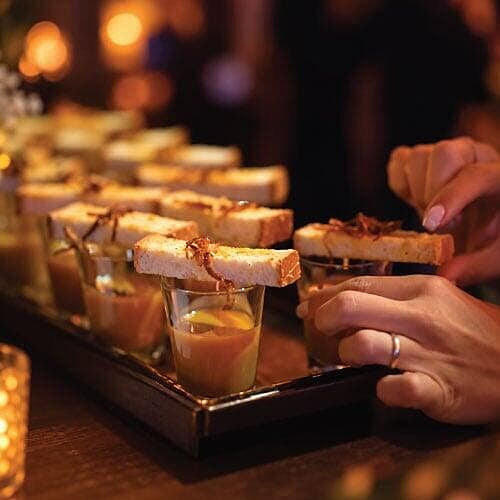
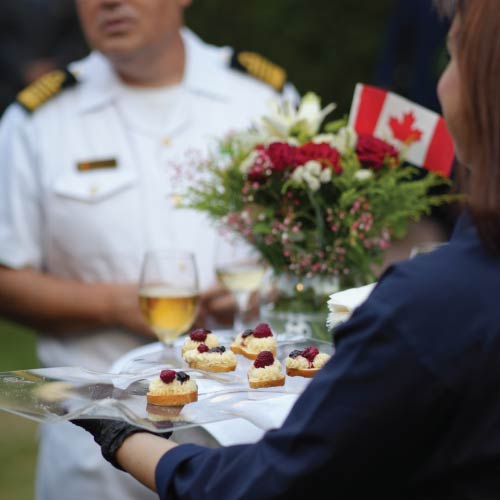
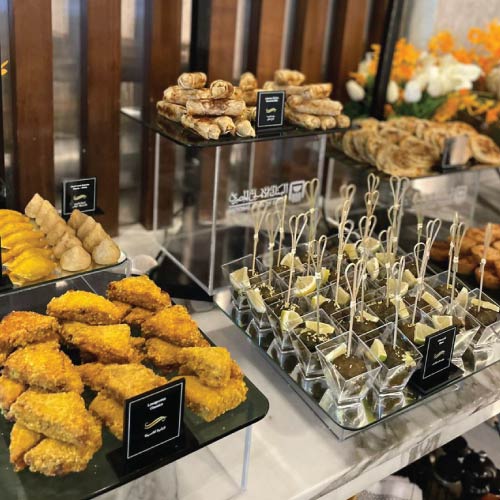
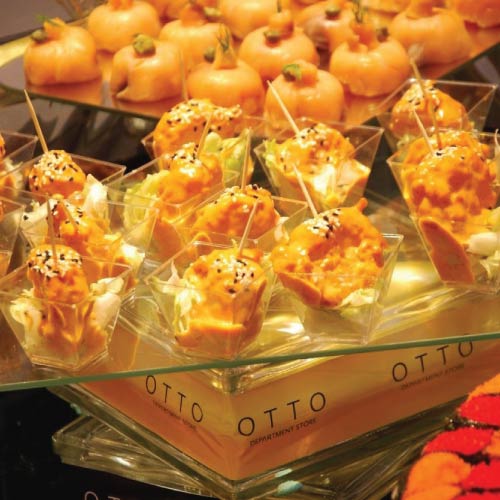
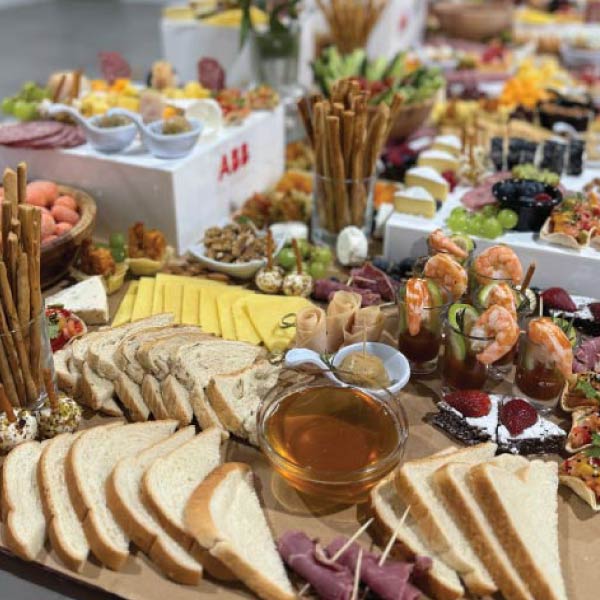
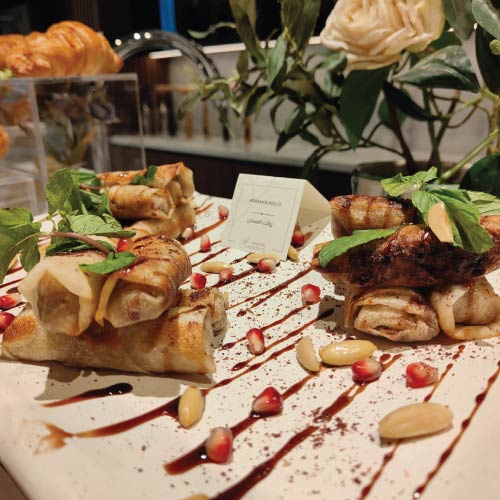
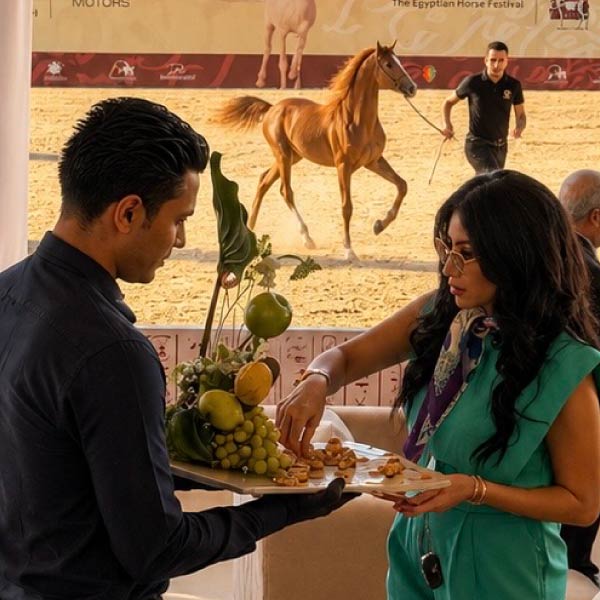
That can affect the service format itself. At a venue with a long replenishment journey, passed finger food may reach guests more effectively than a remote buffet. At another Citadel space, easier back-of-house access may support a different mix of live, buffet or passed service. The choice follows the venue and guest journey rather than a standard package.
What 300+ events actually prove
The strongest part of this case is not the prestige of one location. It is accumulated judgment. Repeated work has built a practical understanding of where service can stage, how power should be separated, which routes slow replenishment, where wind changes presentation, and how each courtyard alters guest flow.
That is why LOriental's Citadel experience functions as more than a gallery of weddings. It is a repeatable operating capability across one of Cairo's most distinctive historic event settings — built event by event since 2022.
Venue regulations, access procedures and operating conditions can change, so they are reconfirmed for every event rather than assumed from a previous booking.