Live Fire, Grilling & Cooking
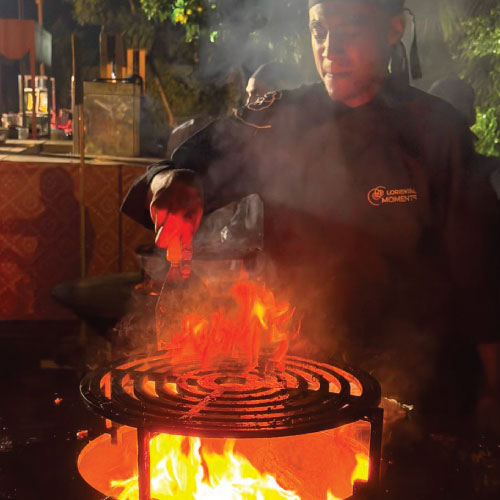
Some stations are live in the most literal sense: the cooking happens in front of the guest. That can mean an open grill, a hot wok, a large cooking vessel or food being cooked to order as guests move through the station. The heat becomes visible, but it also brings sound, aroma and movement into the room.
Our Mongolian Fire Grill is one example. Guests choose from proteins, vegetables and noodles before their combination is cooked over high heat. With Live Paella, the cooking takes place in an oversized paellera that becomes a visual part of the station itself. Other formats bring live grilling into seafood, tandoori-style chicken and Egyptian street-food preparations.
The spectacle comes naturally from the cooking. When that visible culinary action is deliberately designed as a guest-facing moment, it can become Theatrical Hospitality. Oversized cooking formats, dramatic flame, visible transformation and choreographed service are some of the clearest ways a live station can move from interaction into theatre. We do not need to hide the process and reveal a finished plate at the end; the process is part of what the guest came to see.
The techniques behind these dishes sit within a much wider international repertoire of cuisines and cooking methods.
Carving, Slicing & Live Service
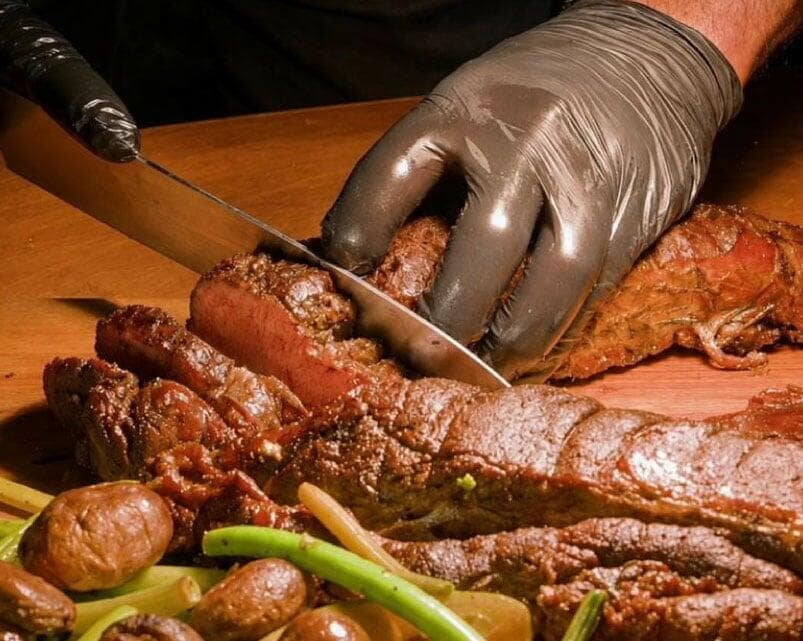
A station does not need to begin with raw food to be genuinely live, sometimes the defining moment is the final cut.
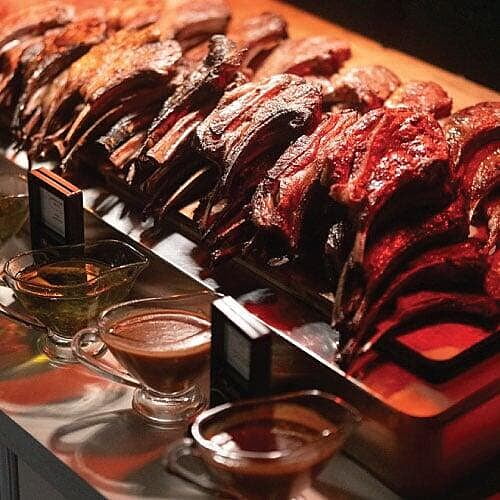
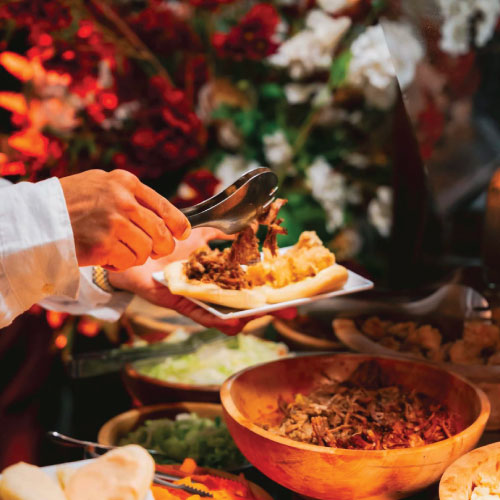
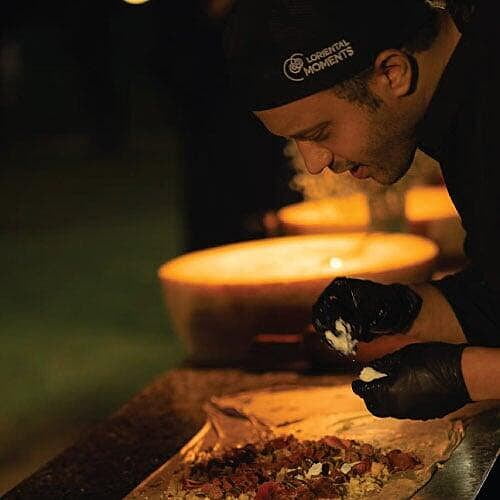
Whole-roast tenderloin can be carved to order. Brazilian Churrascaria brings rodizio-style carving directly into service. Shawarma is cut from the spit and assembled as guests watch. Sushi and sashimi make slicing and rolling part of the experience rather than hiding that specialist work in a back kitchen.
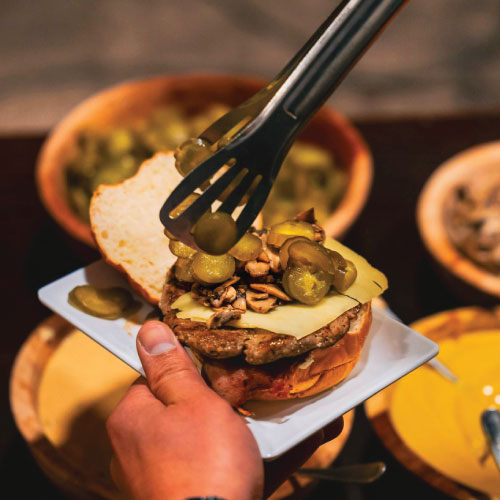
There is something very immediate about seeing the portion created for you. It also changes the rhythm of service. The guest is no longer taking an anonymous prepared portion. They see where it came from, watch it being cut or assembled and receive it directly. Selected examples of these dishes also appear in our Signature Dishes & Culinary Library.
Tossing, Finishing & Final Assembly
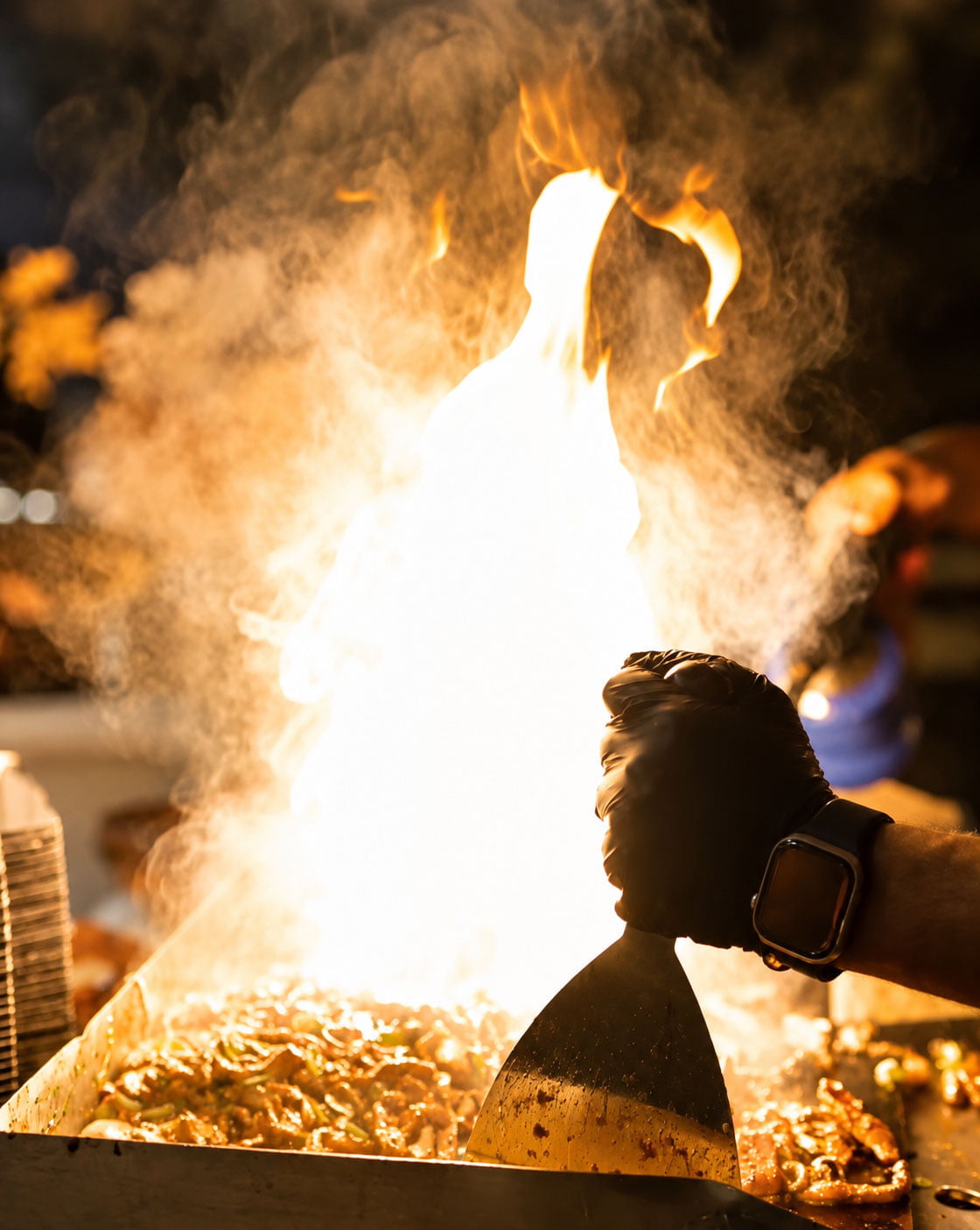
Some dishes do most of their cooking before the guest arrives. What matters live is the last minute. With Pasta Viva, pasta and sauce come together close to service rather than sitting finished for too long. Risotto Rêverie can be worked in controlled batches and finished through a Parmesan wheel. An Asian wok format brings noodles, vegetables and proteins together under high heat immediately before serving.
Desserts work the same way, cannoli can be filled on demand, tiramisu can be assembled live, and mille-feuille benefits from final assembly close to service because the pastry does not spend unnecessary time sitting against its filling.
That final stage might last thirty seconds, but those thirty seconds can make more difference to the food than moving an entire cooking process into the room. This is one of the reasons live service and food designed specifically for event conditions are closely connected.
Fire, Smoke & Sensory Effects
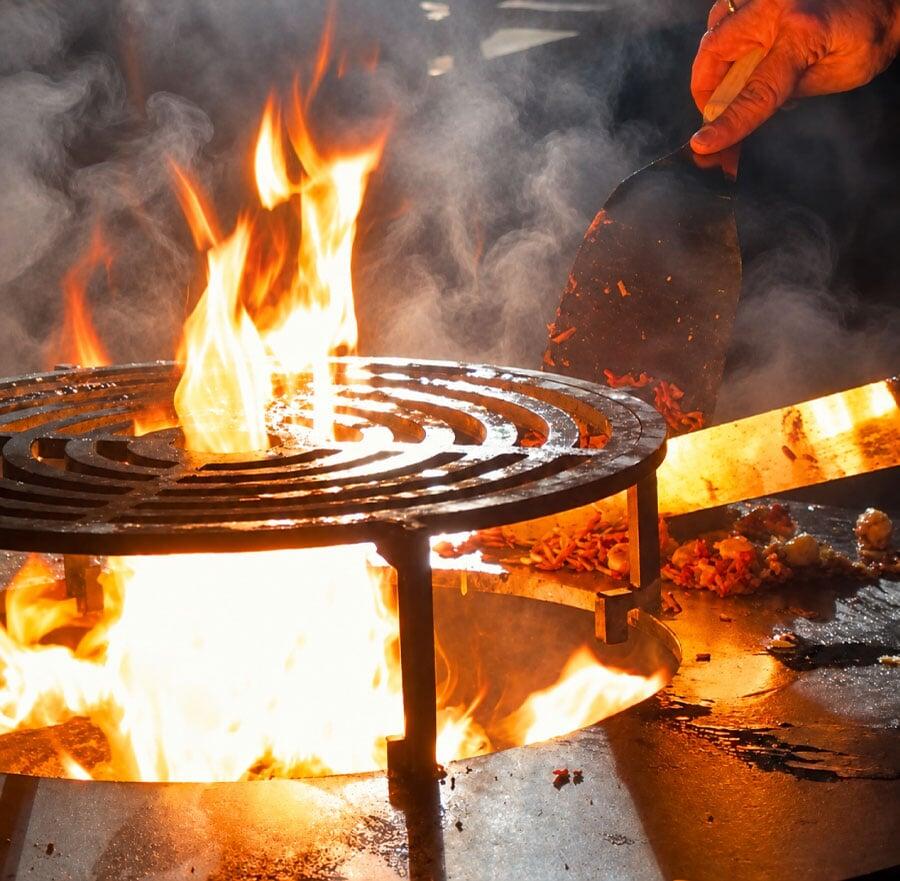
Fire has an obvious visual impact, but it also belongs naturally to food.
Grilling, torching, smoking and high-heat cooking create changes the guest can see, hear and smell. The point is not simply to produce a flame because a flame photographs well. It should feel connected to what is being prepared.
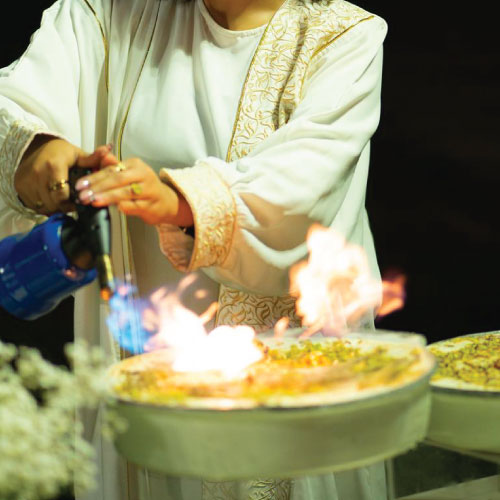
Om Ali Oasis, for example, uses a blowtorch on the individual portion before the guest chooses toppings. The flame gives the familiar dessert a final live moment without turning it into something unrecognizable.
Smoke works differently. In a format such as Texas Smokehouse BBQ, smoking is part of the cooking method itself. Elsewhere, visible smoke or other sensory effects can become part of the presentation when they fit the station.
We treat those effects as another layer of the experience, not a substitute for the food.
Cold Displays, Ice & Ingredient Theatre
Not every dramatic station needs heat. Cold ingredients can create their own kind of theatre when the guest can see the quality, variety and abundance before anything is cooked.
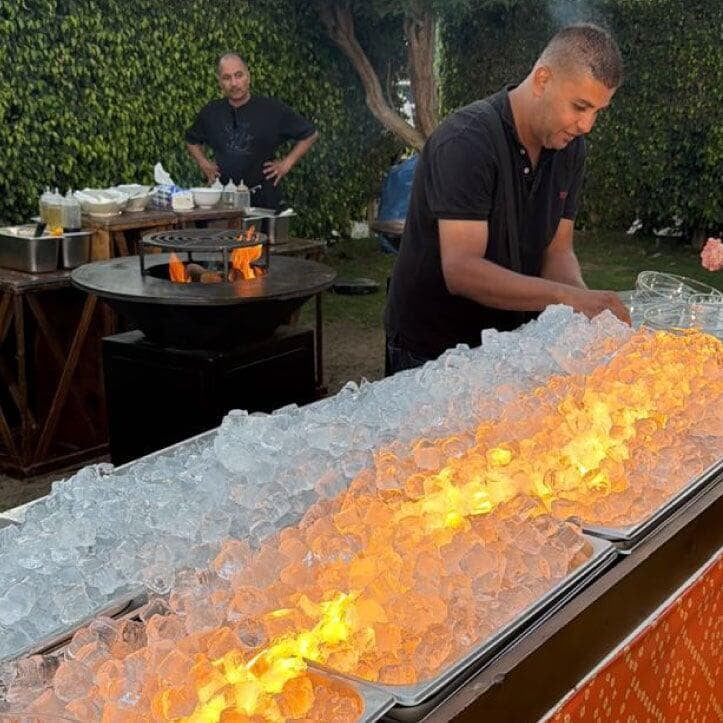
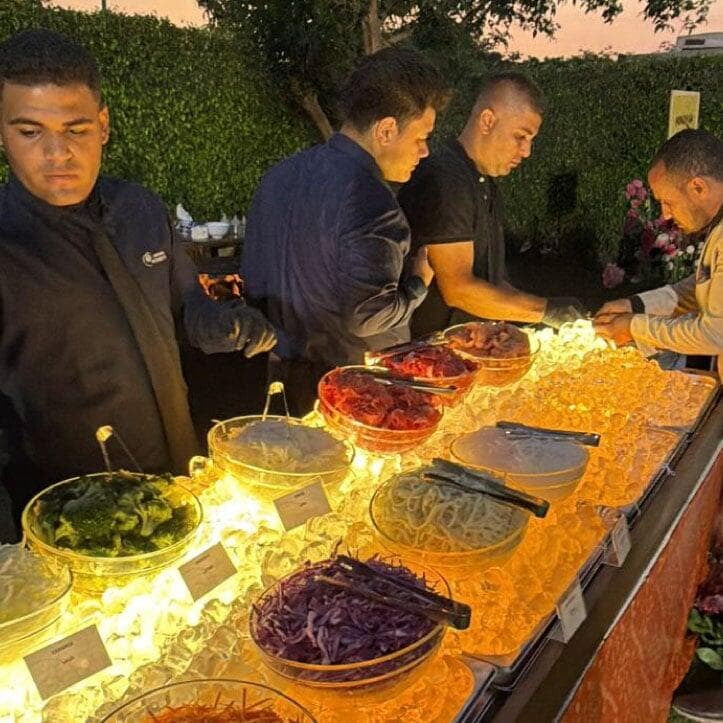
When we first developed the Mongolian Fire Grill, the raw proteins and vegetables were presented over ice as part of the station. LED lighting and theatrical presentation were incorporated around the display, giving the ingredients a strong visual presence before guests even reached the grill.
The cold display also has a practical role. Guests can see the choices, build their own combinations and understand the station before the cooking begins.
The contrast between cold ingredients on ice and the high heat of the grill is part of the experience. The same thinking applies whenever the ingredients themselves are worth putting on show: sometimes the theatre begins before the chef touches them, that is where the live station can begin to overlap with our broader Theatrical Hospitality approach.
When a Live Station Becomes Theatrical
Selected live stations can also become part of LOriental’s Theatrical Hospitality layer when cooking, movement, illumination, oversized formats or guest interaction are deliberately staged as part of the experience.
A live station is already experiential because guests can see, smell and sometimes influence what is happening. It becomes theatrical when the preparation itself is deliberately staged for stronger visual impact, anticipation or memorability.
That may come through kinetic elements such as fire, carving, tossing, oversized cooking vessels, visible transformation or choreographed service, or through scenic elements such as illumination, sculptural presentation or a deliberately designed station environment.
Not every live station needs to be theatrical. The culinary purpose comes first; the theatrical layer is added where it strengthens the guest experience.

How We Engineer Food for Live Service
The visible action is only the final layer of the work. Before a dish is approved for live service, our Culinary R&D process tests what should be prepared in advance, what should happen in front of the guest, and whether that final step improves the food enough to justify the additional complexity. Technique, timing, temperature, texture and service conditions are considered together.
What Is Worth Doing Live?
The first question is simple:
What does doing this in front of the guest actually add?
Sometimes the answer is temperature. Sometimes it is texture, aroma, freshness, personalization or visible craft. Sometimes the live moment turns a familiar dish into a completely different guest experience.
And sometimes the answer is: very little. Not every dish improves when it becomes a station. Some are better coming directly from the kitchen. Others belong on a buffet or in a passed format. The live step has to earn its place. That is why the same Culinary program includes live stations alongside plated dining, buffet formats and other approaches to event food.
Engineering for Texture, Timing & Throughput
Once a dish is chosen for live service, the visible action is only one part of the problem. We have to decide what is prepared in advance, what happens in front of the guest, how quickly each portion can be produced and what equipment the station needs.
The Mongolian Fire Grill taught us how important prep can be. Proteins, vegetables and noodles all cook at different speeds, so we tested protein thicknesses, vegetable cuts and preparation stages until a mixed bowl could finish together on the grill.
Our work with Risotto Rêverie produced a different lesson. At a seated event of around 100 guests, trying to operate four mobile Parmesan-wheel trolleys simultaneously required batches large enough to compromise the texture. We kept the dish, but changed the service rule: plated risotto and controlled stationary Parmesan-wheel service remain; that particular mobile synchronized format does not.
Sometimes the engineering is physical, for our first Live Paella, we could not source the event-scale pan we wanted locally, so we commissioned an approximately one-metre paellera and tested it before the event.
Those stories are documented in more detail in our Culinary R&D Journal.
Adapting the Technique to Real Event Conditions
Live preparation has to protect the food under real event conditions. Guest count, available power, fire restrictions, back-of-house access and service routes affect how much of the technique can happen in front of the guest, how many cooking points are required and what should be prepared in advance.
Throughput is part of culinary quality. A format that gives 60 guests a highly personalized interaction may require a different cooking sequence or additional production points at 300 guests. If scaling the format forces longer holding times, oversized batches or compromises the intended texture, we change the service method rather than compromise the dish.
From Culinary Technique to Catering Format
This page explains the culinary thinking behind live preparation: what is cooked, carved, finished or assembled in front of guests, and why those decisions affect the food. The individual station formats available for events sit within our Catering offering.